What Causes Dark Knuckles in Indian Skin? (Epidemiology & Anatomy)
Dark knuckles (interphalangeal hyperpigmentation) in Indian skin are virtually never caused by poor personal hygiene, dirt, or lack of washing. In South Asian individuals (Fitzpatrick phototypes IV–VI), hyperactive melanocytes at joint flexures darken in response to three major internal triggers: (1) Severe Vitamin B12 deficiency (highly prevalent due to vegetarian diets), which lowers intracellular glutathione and accelerates melanin synthesis; (2) Insulin resistance / prediabetes (Acanthosis Nigricans), where high blood insulin triggers epidermal thickening via IGF-1 receptors; and (3) Mechanical trauma or chemical burns from scrubbing with lemon juice, bleach, or pumice stones.
Across India, few cosmetic concerns evoke as much quiet self-consciousness as dark, hyperpigmented finger joints. Whether signing documents in corporate boardrooms, attending family weddings, or applying nail polish, individuals frequently feel that their hands look "two shades darker" than their arms or face. Unfortunately, because the condition is widely misunderstood as accumulated grime or unwashed suntan, patients subject their hands to aggressive scrubbing, only to find the knuckles turning progressively darker, rougher, and thicker.
From an anatomical perspective, the dorsal skin overlying the proximal interphalangeal (PIP) and distal interphalangeal (DIP) joints possesses unique biomechanical properties:
Continuous Mechanical Flexion
The finger joints fold and stretch thousands of times every day. This constant mechanical stretching exerts shear tension across the basement membrane, signaling acral melanocytes to produce protective melanin pigment.
Minimal Subcutaneous Fat & Sebaceous Glands
The skin over the knuckles is exceptionally thin, tightly adhered to the extensor tendons, and contains minimal sebaceous glands. As a result, it dries out rapidly, predisposing the barrier to micro-fissuring and inflammation.
Acral Melanocyte Reactivity
South Asian melanocytes are genetically primed to overproduce eumelanin in response to even mild physiological stress, hormonal shifts, or nutritional depletion, making the hands a prime site for systemic dyschromia.
High Vascular & Neurogenic Signaling
The microvasculature of the fingers is exquisitely sensitive to systemic metabolic markers—including circulating glucose, insulin spikes, and autonomic neuropathic changes from vitamin deficiencies.
Recognising whether your knuckle darkening stems from a nutritional deficiency (Vitamin B12), an endocrine/metabolic disorder (Insulin Resistance), or chronic friction is the foundational first step to clearing it permanently.
The Vitamin B12 Deficiency Connection: India's Vegetarian Epidemic
One of the most clinically established yet underdiagnosed causes of dark knuckles in India is Vitamin B12 (Cobalamin) deficiency. Multiple epidemiological studies conducted across Indian medical colleges have shown that between 47% and 70% of the Indian population suffers from clinically significant B12 deficiency, primarily driven by traditional vegetarian, Jain, and plant-heavy diets that lack animal protein sources.
Cobalamin Depletion
Lack of dietary B12 impairs one-carbon metabolism, blocking the remethylation of homocysteine into methionine within skin cells.
Glutathione (GSH) Crash
Intracellular levels of reduced glutathione (GSH) drop sharply. Because glutathione naturally inhibits the enzyme tyrosinase, its depletion leaves tyrosinase unchecked.
Dorsal Acral Melanogenesis
Hyperactive acral melanocytes synthesize dense eumelanin granules, which selectively deposit over the dorsal knuckles, nail beds, and toes.
⚠️ The Glutathione Disinhibition Mechanism
In dermatological biochemistry, reduced glutathione (GSH) acts as an essential intracellular brake on melanogenesis. Glutathione binds copper ions at the active site of tyrosinase, suppressing melanin production. When Vitamin B12 levels collapse, cellular glutathione plummets. Uninhibited tyrosinase enzymes pump out melanin, leading to pronounced, smooth hyperpigmentation concentrated over the dorsal knuckles.
Recognizing Associated B12 Deficiency Red Flags
If your dark knuckles are driven by cobalamin deficiency, you will often notice one or more of the following concurrent systemic symptoms:
- Peripheral Neuropathy: Subtle pins-and-needles (paresthesia), tingling, or burning sensations in the fingertips or toes, especially at night.
- Hunter's Glossitis: A smooth, tender, "beefy red" or burning tongue with loss of normal papillae, often accompanied by recurring mouth ulcers (aphthous stomatitis).
- Unexplained Fatigue & Brain Fog: Chronic mid-afternoon exhaustion, lethargy, poor concentration, and low endurance despite adequate sleep.
- Pigmentation on Toes & Palmar Creases: Darkening that also extends to the interphalangeal joints of the feet and deep flexural creases of the palms.
The remarkable aspect of B12-induced knuckle hyperpigmentation is its complete reversibility: once high-dose oral or injectable Methylcobalamin restores intracellular glutathione pools, the dark knuckles begin fading noticeably within 6 to 12 weeks.
Insulin Resistance & Knuckle Acanthosis Nigricans (The Metabolic Signal)
While Vitamin B12 deficiency causes smooth pigmentation, the second major culprit produces a distinctly textured change: Acanthosis Nigricans (AN) of the knuckles, often referred to in clinical literature as "knuckle pads" or "pseudo-acanthosis nigricans."
India is frequently referred to as the metabolic capital of the world, with high rates of prediabetes, Type 2 diabetes, and Polycystic Ovary Syndrome (PCOS). In many young Indian adults, dark, velvety knuckles are the very first visible cutaneous manifestation of metabolic dysfunction, appearing years before blood sugar tests show overt diabetic elevations.
High-Glycemic Diet & Insulin Spikes
Diets rich in refined carbohydrates (white rice, maida, sweets, sweetened beverages) trigger constant surges of pancreatic insulin secretion. Over time, peripheral muscle and liver cells develop insulin resistance.
IGF-1 Receptor Cross-Talk
Compensatory hyperinsulinemia results in massive concentrations of circulating insulin. At supraphysiological levels, insulin crosses over and binds with high affinity to Insulin-Like Growth Factor-1 (IGF-1) receptors on epidermal keratinocytes.
Epidermal Hyperproliferation & Papillomatosis
IGF-1 activation stimulates rapid, abnormal proliferation of both keratinocytes and dermal fibroblasts. The epidermis thickens and undulates into microscopic folds, creating a velvety, rugose texture.
Optical Darkening (The Shadow Effect)
Because the thickened stratum corneum is arranged in thousands of microscopic peaks and valleys, ambient light is trapped rather than reflected. This physical light absorption makes the thickened knuckle folds appear intensely dark brown or black.
💡 Physical Touch Diagnostic: Smooth vs. Velvety
Run your index finger gently across your dark knuckles. If the skin feels completely flat, smooth, and unchanged in texture, it points toward Vitamin B12 deficiency. If the skin feels thickened, leathery, raised, or velvety, with pronounced deepening of the natural joint creases, it is almost certainly Acanthosis Nigricans driven by insulin resistance.
Diagnostic Matrix: B12 vs. Insulin Resistance vs. Friction vs. Addison's
Before applying any creams or taking supplements, examine this clinical differential matrix to pinpoint your exact diagnosis:
| Diagnostic Category | Surface Texture & Feel | Distribution & Location | Underlying Root Cause | Definitive Blood Test / Hallmark |
|---|---|---|---|---|
| Vitamin B12 Deficiency | Smooth, flat macules; normal skin thickness | Dorsal knuckles, interphalangeal folds, toes, nail beds | Glutathione depletion leading to unchecked tyrosinase activity | Serum Vitamin B12 < 200 pg/mL; elevated homocysteine / MMA; MCV > 100 fL |
| Insulin Resistance (AN) | Thickened, velvety, rough, leathery ("knuckle pads") | Knuckles, posterior neck creases, axillae, groin folds | Hyperinsulinemia stimulating IGF-1 receptors on keratinocytes | Fasting Insulin > 10 µIU/mL; HOMA-IR > 2.0; HbA1c > 5.7% (prediabetes) |
| Mechanical / Frictional Melanosis | Rough, dry, occasionally calloused; no velvety texture | Specific prominent knuckles, outer hand borders, thumb base | Habitual knuckle cracking, manual friction, tight rings, scrubbing | History of trauma; normal B12 and normal fasting insulin markers |
| Chemical / Lemon Burn (PIH) | Shiny, hyper-pigmented patches with patchy borders | Exclusively where lemon, bleach, or pumice stone was applied | Phytophotodermatitis and epidermal barrier necrosis from harsh remedies | Clear history of applying home remedies followed by rapid darkening |
| Addison's Disease (Rare) | Diffuse bronze darkening; smooth texture | Knuckles, palmar skin creases, inner cheeks (buccal mucosa) | Adrenal insufficiency; elevated ACTH and MSH stimulate melanogenesis | Low 8 AM Serum Cortisol (< 5 µg/dL); markedly elevated Plasma ACTH |
The Lemon, Bleach & Pumice Stone Disaster: Why Home Remedies Darken Knuckles
Search online in India for "how to lighten dark knuckles at home," and you will find hundreds of blogs and video tutorials advocating rubbing fresh lemon halves dipped in sugar, applying baking soda pastes, scrubbing with pumice stones, or using over-the-counter triple-action bleaching creams like Betnovate, Panderm, or SkinLite.
🚨 The Phytophotodermatitis & Friction Burn Hazard
Raw lemon juice has an extreme acidic pH of ~2.0 (100 times more acidic than healthy skin) and contains potent natural chemicals called furocoumarins (psoralens). When applied to thin knuckle skin and exposed to ambient ultraviolet light, psoralens cause a photo-toxic chemical burn known as phytophotodermatitis. This destroys basal keratinocytes, releasing massive quantities of melanin into the deep dermis and creating permanent, slate-grey Post-Inflammatory Hyperpigmentation (PIH).
The Diagnostic Blood Panel: Exact Tests Every Indian Patient Needs
Instead of guessing which home remedy to try next, dermatologists strongly recommend obtaining a targeted blood panel. At any certified diagnostic laboratory in India (such as Lal PathLabs, SRL, Metropolis, or Apollo Diagnostics), ask for the following 5 parameters:
1. Serum Vitamin B12 (Cyanocobalamin)
Target Range: While laboratory reference ranges often state 200–900 pg/mL as "normal," functional medicine and dermatology protocols consider anything below 350–400 pg/mL deficient in the context of active cutaneous hyperpigmentation or neurological symptoms. If your value is under 200 pg/mL, severe deficiency is confirmed.
2. Fasting Serum Insulin & Fasting Plasma Glucose (HOMA-IR)
Why fasting insulin matters: Routine fasting blood glucose checks only show late-stage diabetes. Fasting insulin detects insulin resistance 5 to 10 years earlier. Your dermatologist or endocrinologist will calculate your HOMA-IR score: [Fasting Insulin (µIU/mL) × Fasting Glucose (mg/dL)] / 405. A HOMA-IR score greater than 2.0 confirms significant insulin resistance driving your knuckle acanthosis nigricans.
3. Glycated Hemoglobin (HbA1c)
3-Month Metabolic Average: Measures the percentage of hemoglobin bound to glucose over the past 90 days. An HbA1c between 5.7% and 6.4% indicates prediabetes, while 6.5% or above signifies Type 2 diabetes requiring comprehensive medical management.
4. Complete Blood Count (CBC) with Mean Corpuscular Volume (MCV)
Macrocytic Megaloblastic Marker: Vitamin B12 is crucial for red blood cell synthesis. In longstanding deficiency, red blood cells become abnormally large. An elevated MCV > 100 fL strongly corroborates megaloblastic changes associated with cobalamin depletion.
5. Thyroid Stimulating Hormone (TSH)
Metabolic Co-Factor: Subclinical hypothyroidism frequently co-occurs with insulin resistance and PCOS in Indian women, causing slowed skin turnover, impaired sebum synthesis, and coarse, dark hyperkeratotic skin folds.
For more details on preparing for metabolic lab work, see our comprehensive guide to essential blood tests for skin pigmentation in India.
Targeted Medical Therapies: Oral Methylcobalamin & Metabolic Reset
Once your lab results clarify the root cause, treatment must target internal biochemistry rather than relying exclusively on surface creams.
High-Dose Methylcobalamin (1,500 mcg/day)
For Vitamin B12 deficiency, standard multivitamin tablets (which contain tiny 1–5 mcg doses) are completely ineffective. Dermatologists prescribe Methylcobalamin 1,500 mcg daily (the active, bioactive coenzyme form) often combined with Alpha Lipoic Acid and L-Methylfolate for 90 to 180 days. In severe cases (B12 < 150 pg/mL), 5 to 10 intramuscular injections of 1,000 mcg are given initially.
Dietary Low-Glycemic Index Swaps
To reverse insulin resistance-driven acanthosis, reduce rapid glucose spikes. Replace polished white rice, maida rotis, and sugary chai with high-fiber alternatives: whole millets (Jowar, Bajra, Ragi), steel-cut oats, sprouted legumes (Moong, Chana), and plentiful non-starchy vegetables.
Physical Exercise to Clear Muscle Glycogen
Resistance training and brisk walking for 30 minutes after meals dramatically enhance insulin sensitivity by activating GLUT-4 glucose transporters in skeletal muscle independent of insulin, directly bringing down circulating insulin levels.
Myo-Inositol or Metformin (Under Rx)
For women with PCOS-associated dark knuckles and acanthosis nigricans, insulin sensitizers such as Myo-Inositol (2g–4g daily) or prescription Metformin significantly improve ovarian function and accelerate the fading of velvety joint plaques.
The Topical Dermatological Regimen: Urea 20%, Lactic Acid & Retinoids
While nutritional and metabolic correction halts new pigment formation from within, the existing thickened stratum corneum over your knuckles requires targeted topical keratolytics to shed accumulated melanin safely.
1. High-Potency Urea Creams (10% to 20%) — The Primary Pillar
Why Urea is the gold standard for knuckles: Urea is a natural moisturizing factor (NMF) component with dual actions. At 10% to 20% concentrations (pharmacy brands: Logifeel, Moisturex, Ureka, or Fash Foam Urea), Urea dissolves hydrogen bonds in hyperkeratotic keratin proteins. It gently softens and thins leathery "knuckle pads" without causing chemical burns or peeling. Apply a pea-sized amount directly to the knuckles twice daily.
2. Lactic Acid 10%–12% Body Emulsions
Hydrating AHA Exfoliation: Lactic acid is the largest molecule among the alpha-hydroxy acids, meaning it penetrates slowly and evenly without provoking inflammatory spikes in melanin. Applying a lactic acid lotion (e.g., Lacsoft) 3 evenings per week accelerates dead cell shedding while boosting ceramide synthesis.
3. Buffered Topical Retinoids (Adapalene 0.1% or Retinol)
Cellular Differentiation: Retinoids accelerate the migration of new, non-pigmented keratinocytes to the surface. To prevent dryness on delicate finger joints, mix a tiny dot of Adapalene 0.1% gel with a ceramide hand cream and apply 2 nights per week only.
4. Pigment-Inhibiting Actives (Tranexamic Acid 3% & Niacinamide 5%)
Inhibiting Melanosome Transfer: Niacinamide prevents melanosomes from transferring pigment into surrounding keratinocytes, while topical Tranexamic Acid inhibits UV- and friction-induced plasmin activity, calming local melanocyte signaling.
5. Broad-Spectrum Hand Sunscreen (SPF 50+ PA+++)
The Non-Negotiable Barrier: Hands are continuously exposed to sunlight through windshields while driving, two-wheeler commuting, and walking outdoors. Without daily broad-spectrum sunscreen applied to the backs of your hands, UV radiation will instantly re-darken your knuckles.
The Gentle Daily Hand-Care Protocol: Wash, Hydrate & Protect
To ensure steady, long-term improvement without setbacks, follow this practical 4-step hand-care lifestyle protocol:
Soap-Free Syndet Hand Cleansers
Traditional bar soaps and commercial liquid hand washes contain harsh Sodium Lauryl Sulfate (SLS) with an alkaline pH of 8 to 10. Replace them with mild, soap-free syndet cleansers or micellar washes (pH 5.5) that preserve hand lipids.
The 60-Second "Soak & Smear" Rule
After washing your hands, never let them air-dry completely (which triggers rapid evaporation and barrier dehydration). Within 60 seconds, apply your Urea 10%–20% cream or a thick ceramide moisturizer to lock in residual moisture.
Protective Gloves for Chores
Harsh dishwashing liquids, laundry detergents, and floor cleaners contain potent surfactants that strip epidermal lipids. Always wear cotton-lined rubber or silicone dishwashing gloves during household cleaning.
Stop Habitual Knuckle Cracking
Habitual, forceful cracking of finger joints causes repetitive micro-contusions and stretching tension across the dorsal capsule, sustaining low-grade chronic inflammation that stimulates melanocytes.
Frequently Asked Questions About Dark Knuckles in India
Dark knuckles are almost never a hygiene issue. In Indian skin (Fitzpatrick IV–VI), hyperpigmentation over the interphalangeal joints is primarily driven by three internal and mechanical factors: (1) Vitamin B12 deficiency, which reduces intracellular glutathione and disinhibits tyrosinase; (2) Insulin resistance (acanthosis nigricans), where high circulating insulin stimulates keratinocytes and fibroblasts via IGF-1 receptors to produce thickened, darker skin; or (3) Chronic mechanical friction and chemical burns from aggressive scrubbing, pumice stones, or raw lemon juice.
Vitamin B12 (cobalamin) is necessary for cellular methylation and homocysteine metabolism. In its absence, intracellular levels of reduced glutathione (GSH) drop precipitously. Glutathione acts as a physiological inhibitor of tyrosinase, the rate-limiting enzyme in melanin production. When glutathione is depleted, melanocytes become hyperactive and produce excess eumelanin, which selectively manifests over the dorsal joint creases of the hands and feet. Because B12 is found almost exclusively in animal foods, Indian vegetarians have a 47% to 70% prevalence of deficiency.
When dark knuckles are caused by insulin resistance (acanthosis nigricans), the skin is typically thickened, velvety, or leathery to the touch with accentuated skin lines (rugose appearance), rather than completely smooth. It is almost always accompanied by velvety dark pigmentation in other skin folds, such as the back of the neck, armpits, or groin, and small skin tags. A fasting insulin blood test and HOMA-IR calculation can definitively confirm insulin resistance.
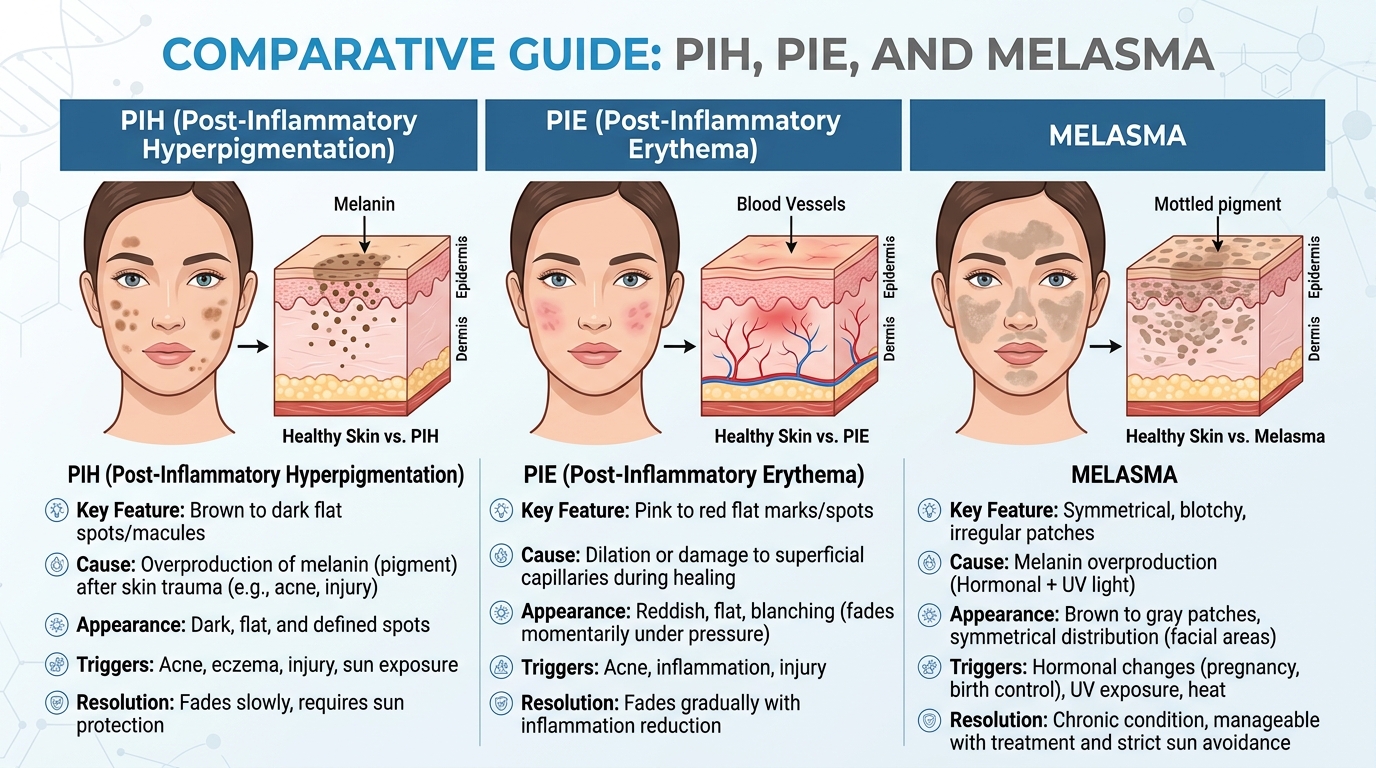
Raw lemon juice is highly acidic (pH ~2.0) and contains psoralens, which trigger phototoxic reactions (phytophotodermatitis) when exposed to Indian sunlight, causing severe dermal burns. Baking soda is harsh and alkaline (pH ~9.0), stripping natural barrier lipids. Scrubbing knuckles with these kitchen remedies induces severe inflammation, which prompts South Asian melanocytes to deposit dense melanin into the papillary dermis, creating stubborn Post-Inflammatory Hyperpigmentation (PIH).
Dermatologists recommend a focused metabolic and nutritional panel: (1) Serum Vitamin B12 (Cyanocobalamin); (2) Fasting Serum Insulin and Fasting Plasma Glucose to compute the HOMA-IR score; (3) HbA1c to screen for 3-month glycemic control and prediabetes; and (4) Complete Blood Count (CBC) with Peripheral Smear to check for elevated Mean Corpuscular Volume (MCV > 100 fL) indicating macrocytic megaloblastic anemia.
Urea at a 10% to 20% concentration acts as an intensive keratolytic and humectant. It dissolves the hydrogen bonds holding dead, hyperkeratinized skin cells together, gently thinning the thickened stratum corneum over joint folds without causing mechanical micro-tears or chemical burns. It simultaneously draws water deep into the skin, softening velvety acanthosis patches and allowing topical brightening agents to penetrate effectively.
When dark knuckles are purely due to Vitamin B12 deficiency, therapeutic supplementation with high-dose oral Methylcobalamin (1,500 mcg daily) or weekly intramuscular injections leads to visible lightening within 6 to 12 weeks as intracellular glutathione levels recover and normal epidermal turnover replaces hyperpigmented keratinocytes. Complete resolution usually occurs within 3 to 6 months.
No. Dermatologists strictly advise against using over-the-counter steroid creams (such as Betnovate, Panderm, or Dermikem) on dark knuckles. While steroids may temporarily reduce inflammation, prolonged misuse causes severe epidermal thinning, telangiectasia (broken blood vessels), steroid dependency, and severe rebound hyperpigmentation that is far darker and more stubborn than the original concern.