
If you have tried salicylic acid washes or harsh scrubs for acne only to end up with dry, flaky skin and dark spots that refuse to fade, you are not alone. Many acne treatments dry out your skin barrier while doing little for the red or brown marks left behind.
Azelaic acid works differently. It is a gentle yet active compound that tackles three major skin issues at once: it calms swelling, reduces acne-causing bacteria, and prevents extra melanin production. This makes it particularly effective for Indian skin, which often reacts to breakouts by developing stubborn brown pigmentation.
Whether you are considering a 10% over-the-counter serum or a 15% pharmacy gel like Aziderm, here is everything you need to know to use it safely and see clear results.
1. How Azelaic Acid Heals Acne and Dark Spots
Azelaic acid is a naturally occurring compound that delivers triple-action benefits for acne-prone skin:
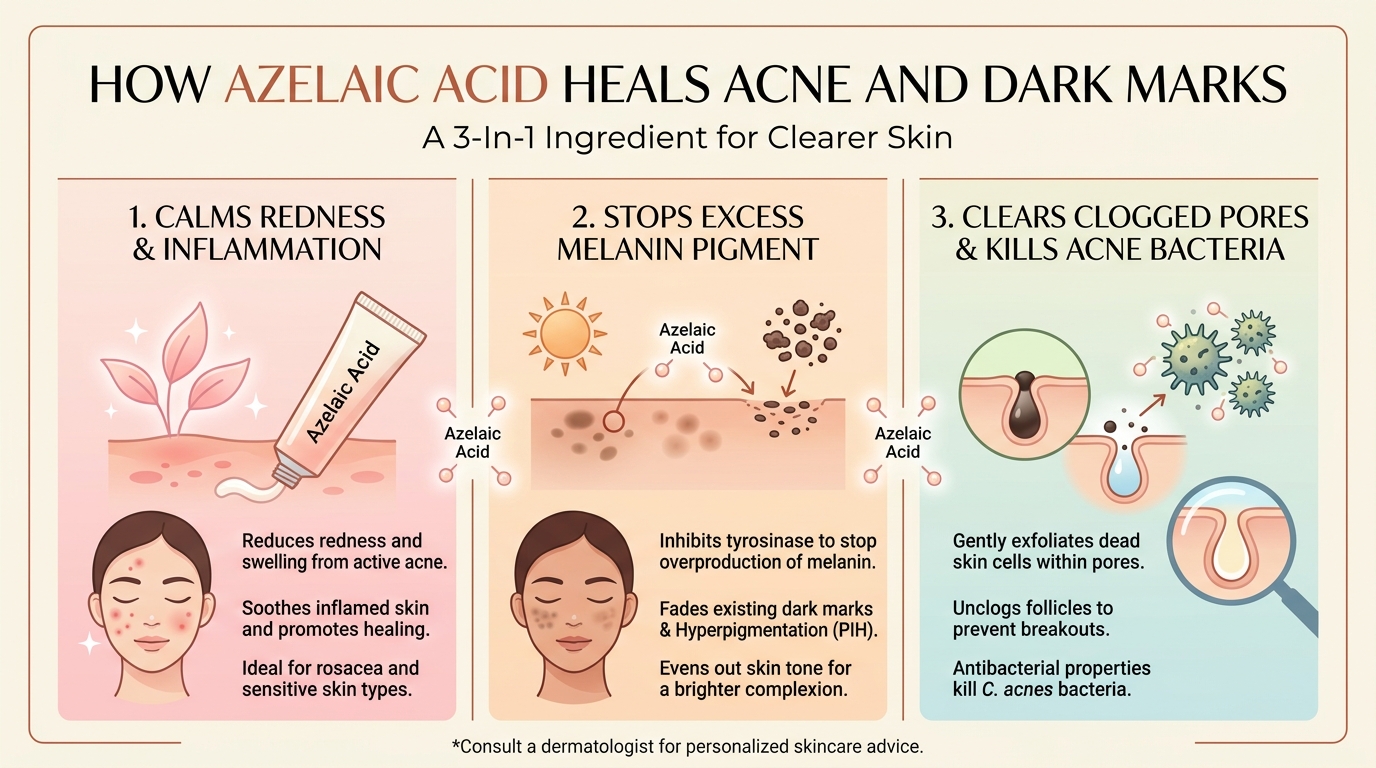
- Slows Down Excess Melanin: When a pimple heals on Indian skin, pigment cells often dump too much melanin, leaving a flat dark mark known as post-inflammatory hyperpigmentation (PIH). Azelaic acid targets only the overactive pigment cells, helping marks fade without lightening the surrounding skin.
- Calms Redness and Swelling: It has soothing properties that cool down hot, inflamed red bumps and reduce facial flushing in rosacea-prone skin.
- Clears Trapped Pores: It gently encourages dead skin cells to shed naturally while reducing the bacteria that cause breakouts, preventing new pimples from forming.
2. 10% OTC vs. 15% Pharmacy Gel: Which One Do You Need?
In Indian pharmacies and beauty stores, azelaic acid comes in two main categories: 10% cosmetic products and 15% pharmacy-grade gels.
Products like Minimalist 10% or Chemist at Play are gentle starting points. They help brighten mild dullness and even out tone with low risk of stinging. Ideal for sensitive skin newcomers.
Medicines like Aziderm 15% Gel or Picspot 15% provide the concentration tested in dermatology clinical trials for moderate acne, persistent redness, and deep brown marks.
Why Gel Formulation Matters on Indian Skin: Heavy creams and ointments often contain thick oils that can clog pores in humid Indian climates. A lightweight micro-gel vehicle absorbs cleanly into the skin without leaving a greasy film or triggering blackheads.
3. Popular Azelaic Acid Products in India
Here is an objective comparison of common azelaic acid products found in Indian pharmacies and retail stores:
| Product Name | Strength & Type | Texture | Best Suited For |
|---|---|---|---|
| Aziderm 15% Gel | 15% Pharmacy (Rx) | Light Micro-Gel | Top Pick Active pimples, dark brown marks (PIH), oily skin. |
| Picspot 15% Gel | 15% Pharmacy (Rx) | Clear Gel | Oily Skin Quick-absorbing gel for humid weather and spot care. |
| Exazel N | Azelaic + Niacinamide | Soothing Gel-Cream | Sensitive Skin Barrier support while treating mild acne and redness. |
| Minimalist 10% Azelaic | 10% Over-The-Counter | Lightweight Serum | Beginners Daily skin tone evening and first-time acid users. |
| Eazel 10% Cream | 10% Over-The-Counter | Moisturizing Cream | Dry Skin Drier skin types needing moisture alongside gentle exfoliation. |
4. The Dermatologist Secret: Pairing Azelaic Acid with Retinoids
One of the most effective regimens for stubborn acne and marks is combining azelaic acid with a topical retinoid like adapalene or tretinoin. However, putting them on at the exact same moment can cause peeling and barrier damage.
- Morning: Cleanse with water or gentle wash → Apply a pea-sized amount of 15% Azelaic Acid Gel → Moisturizer → SPF 50 Sunscreen.
- Night: Gentle cleanser → Light moisturizer → Apply a pea-sized amount of your Retinoid (Adapalene or Tretinoin) on dry skin.
This split routine allows azelaic acid to calm inflammation during the day, while your retinoid speeds up cellular renewal overnight. Always apply sunscreen daily, as both ingredients make skin more sun-sensitive.
5. Why Does It Tingle or Itch? (And How to Stop It)
When starting azelaic acid, almost everyone experiences a distinct prickling, tingling, or itching sensation for 10 to 15 minutes after application. This is completely expected.
Because azelaic acid requires an acidic environment to penetrate skin cells, it activates surface sensory nerves. This is not an allergic reaction, and the sensation typically disappears after 10 to 14 days of consistent use.
The Sandwich Buffer Technique
If the tingling feels uncomfortable, use the buffering method:
- Wash your face and pat it completely dry. (Applying acids to damp skin increases tingling).
- Apply a thin layer of a gentle barrier moisturizer and wait 5 minutes.
- Dot a pea-sized amount of azelaic acid over the moisturizer.
- Start by applying it every second night. Once your skin feels comfortable, you can move to nightly use.
6. Dermatologist Video: Is Azelaic Acid Worth the Hype?
Watch dermatologists Dr. Shah and Dr. Maxfield explain how azelaic acid works, why it helps acne and dark marks, and how to use it safely:
Doctorly: Azelaic Acid Explained by Dermatologists
- Azelaic acid works for three conditions simultaneously: acne breakouts, hyperpigmentation marks, and facial redness (rosacea).
- Unlike harsh chemical peels, it does not bleach normal skin; it only targets hyperactive pigment cells.
- A pea-sized amount spread thinly over the entire face works better than slathering thick patches on spots.
7. Find Your Azelaic Acid Routine
Answer three quick questions to see which strength and method fits your skin best:
Azelaic Acid Protocol Finder
Select your answers below to view your personalized routine.
8. Frequently Asked Questions
Yes. Azelaic acid has an FDA Category B rating. It is one of the few acne and mark-fading treatments considered safe by doctors during pregnancy and nursing, making it an alternative when retinoids cannot be used.
Yes, but using them at the same time can irritate sensitive skin. Many people apply Vitamin C in the morning for antioxidant defense and Azelaic Acid at night, or alternate them on different days.
Azelaic acid works best at a lower pH level (around 4.0), which can stimulate surface nerve endings and cause a prickly or itchy feeling for 10 to 15 minutes. This usually settles within two weeks as your skin adapts.
Beginners and people with easily irritated skin often start with 10% over-the-counter serums. For persistent acne, redness, or dark marks, 15% pharmacy gels like Aziderm deliver stronger results and absorb cleanly on oily skin.
If you feel itching or stinging, put your moisturizer on first, wait 5 minutes, and then apply the azelaic acid on top. If your skin is comfortable and adjusted, applying it to clean, dry skin under your moisturizer gives the best results.
Azelaic acid slows down overactive pigment cells. Most people see noticeable fading of brown and dark acne marks after 8 to 12 weeks of daily application combined with sunscreen.
Find the Right Acne Solution for Your Face
Unsure whether your marks need azelaic acid, salicylic acid, or a retinoid? Get an instant skin assessment based on your breakout type.
Scan Your Face in 60 Seconds