What Is Pigmented Cosmetic Dermatitis (Riehl's Melanosis)?
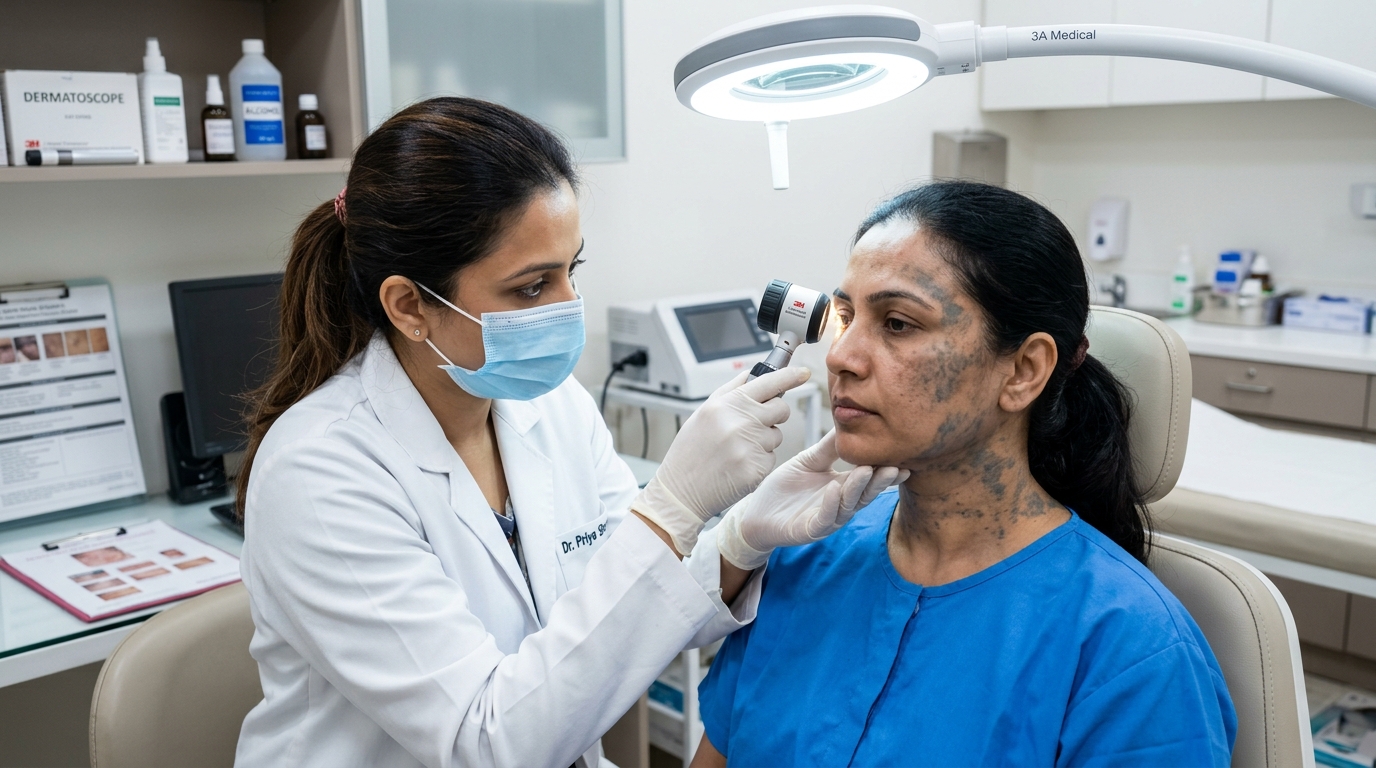
Pigmented Cosmetic Dermatitis (PCD), historically recognized as Riehl's Melanosis, is a delayed-type (Type IV) allergic contact dermatitis common in Indian skin (Fitzpatrick IV–VI). It presents as mottled, reticulated (net-like) slate-grey, charcoal, or reddish-brown hyperpigmentation across the forehead, anterior hairline, temples, cheeks, and lateral neck. Crucially, it is not standard melasma or a sun tan. It is caused by chronic, low-intensity allergic sensitization to synthetic azo dyes in commercial kumkum/sindoor, fragrances, kajal, or hair dyes, which triggers micro-inflammation at the dermo-epidermal junction and drops melanin deep into the dermis.
In dermatology outpatient clinics across India, thousands of women seek consultation for dark, ashy, dirty-looking discolouration spreading across their mid-forehead, temples, and cheeks. Most describe having tried countless fairness creams, salon bleach packs, and detan treatments—only to find the patches turning darker, greyer, and more resistant over time.
This distinct clinical entity is diagnosed as Pigmented Cosmetic Dermatitis (PCD). First described in 1917 by Austrian dermatologist Gustav Riehl during World War I (when wartime cosmetic oils and harsh substitutes triggered facial discolouration), the condition is today understood as a specialized contact dermatosis where repeated exposure to contact allergens causes melanin incontinence without producing overt, weeping eczema.
The Reticulated "Net-Like" Pattern
Unlike melasma, which forms uniform brown geographical plaques, PCD presents as delicate, mottled, lace-like or reticulated macules. This occurs because the inflammatory infiltrate follows the microscopic lines of cosmetic application and hair follicular orifices.
The Forehead & Hairline Predilection
In Indian women, PCD concentrates heavily on the central forehead (the bindi zone) and the anterior scalp parting (the sindoor zone), frequently spilling down onto the temples and lateral cheeks.
Pigment Incontinence & The Tyndall Effect
Sensitizing contact allergens trigger basal keratinocyte necrosis. Melanin spills into the papillary dermis and is devoured by immune melanophages. Light scattering through deep skin makes the pigment appear slate-grey or bluish-black.
Photocontact Amplification
In India's tropical climate, ambient ultraviolet (UV-A) radiation interacts with cosmetic allergens, creating phototoxic free radicals that accelerate allergic sensitization and melanogenesis.
The Kumkum & Sindoor Connection: India's Cultural Contact Allergen
For millions of married Indian women, applying vermilion (sindoor) along the hair parting (maang) and wearing a bindi or kumkum between the eyebrows (ajna chakra) is an indispensable daily cultural and marital practice spanning decades. Tragically, this exact tradition has become one of the leading drivers of severe facial contact dyschromia in South Asia.
🚨 The Chemical Adulteration Crisis
Historically, authentic traditional kumkum was harmless—prepared by fermenting pure turmeric root with slaked lime (calcium hydroxide) and lemon extract. Today, inexpensive commercial kumkum powders, liquid sindoor, and sticker bindis sold in Indian markets are mass-manufactured with toxic synthetic industrial dyes, azo pigments, and chemical adhesives that are notorious skin sensitizers.
Azo Dye Penetration
Harmful synthetic dyes like Sudan I, Sudan IV, and Brilliant Lake Red R penetrate through the thin stratum corneum of the forehead and hair follicles daily.
Subclinical T-Cell Attack
The immune system identifies the dye as a foreign hapten. Cytotoxic T-lymphocytes launch a low-grade Type IV allergic attack against basal epidermal cells.
Dermal Melanophage Stacking
Basal melanocytes rupture, dumping melanin into the upper dermis. Dermal melanophages engulf this pigment, locking it in place as an indelible slate-grey patch.
Known Chemical Allergens in Commercial Sindoor & Kumkum:
- Sudan I, II, III & IV: Highly allergenic, fat-soluble azo industrial dyes frequently used to impart intense red and maroon coloration.
- Brilliant Lake Red R (Pigment Red 4): A synthetic coal-tar dye widely identified in Indian patch-testing studies as a primary trigger of forehead contact dermatitis.
- Para-Tertiary-Butylphenol (PTBP): A powerful synthetic adhesive resin used on the back of self-adhesive "sticker bindis," which can cause both contact depigmentation (chemical leukoderma) and paradoxical hyperpigmentation.
- Heavy Metals (Mercuric Sulfide & Lead Tetroxide): Adulterants in non-standardized traditional vermilion that cause heavy metal contact allergy and cutaneous hyperpigmentation.
Top Cosmetic Allergens on Indian Faces: Fragrances, Kajal & Hair Dyes
Beyond kumkum, dermatological patch test audits across Indian medical centers (such as AIIMS and PGIMER) show that modern facial cosmetics contain a wide array of hidden contact sensitizers:
Fragrances & Essential Oils
Scented day creams, fairness moisturisers, aftershaves, and synthetic sandalwood oils contain benzyl salicylate, cinnamic alcohol, geraniol, eugenol, and hydroxycitronellal. When exposed to sunlight on the cheeks and neck, they provoke photocontact melanosis.
Traditional Kajal, Kohl & Surma
Unregulated homemade or street-purchased kajal often contains carbon black, coal tar dyes, and lead impurities that migrate from the lower eyelids onto the upper cheekbones, causing dark malar shading.
Hair Dyes (PPD) & Color Rinses
Paraphenylenediamine (PPD) and resorcinol in synthetic boxed hair dyes wash over the hairline, temples, and lateral neck during showering, sparking delayed contact hypersensitivity that mimics melasma.
Preservatives (Kathon CG & Thimerosal)
Preservatives in cleansing wet wipes, liquid makeup removers, and foundations (like methylisothiazolinone and thimerosal) cause low-grade burning and persistent erythema that resolves into dark pigmentation.
Diagnostic Matrix: PCD vs. Melasma vs. LPP vs. Ochronosis
Because facial discolouration is frequently misdiagnosed in clinical practice, patients are often prescribed inappropriate treatments. Use this dermatological matrix to distinguish Pigmented Cosmetic Dermatitis from other conditions:
| Diagnostic Feature | Pigmented Cosmetic Dermatitis (PCD) | Melasma (Chloasma) | Lichen Planus Pigmentosus (LPP) | Exogenous Ochronosis |
|---|---|---|---|---|
| Primary Color & Hue | Slate-grey, dusky brown, or reddish-brown; mottled | Light brown to dark brown; never slate-grey or bluish | Ashy slate-grey, charcoal, or bluish-violet | Caviar-like pinpoint dark blue-black speckles |
| Morphology & Margins | Reticulated (net-like) or mottled; blurred margins | Geographical, solid macules with irregular edges | Diffuse or reticular coalescing patches | Reticulated sooty discoloration with follicular plugging |
| Facial Distribution | Forehead (bindi site), anterior hairline, temples, cheeks | Centrofacial: malar cheeks, nose bridge, upper lip | Temples, lateral forehead, neck, and flexural folds | Malar prominence, zygomatic arch, periorbital area |
| Root Trigger | Type IV allergy to cosmetics, kumkum, or fragrances | Estrogen/progesterone, UV-A/visible light, genetics | Autoimmune T-cell interface attack (mustard oil, PPD) | Prolonged high-strength hydroquinone (>6 months) |
| Patch Test & Biopsy | Positive patch test to cosmetic series; dermal melanophages | Negative patch test; epidermal/mixed melanin | Interface lichenoid dermatitis; dense melanophages | Banana-shaped yellow-brown ochre deposits in dermis |
💡 The Hallmark Clinical Clue
If your pigmentation started at the center of your forehead or along your hair parting and spread downward in a reticulated, net-like grey pattern, it is overwhelmingly likely to be Pigmented Cosmetic Dermatitis rather than melasma. Treating it with aggressive bleaching creams will trigger severe rebound worsening.
The Diagnostic Gold Standard: Patch Testing with the Indian Cosmetic Series
In dermatology, guessing which cream or cosmetic caused your pigmentation is ineffective. The gold standard diagnostic tool is standardized patch testing, performed by a clinical dermatologist.
1. Application of Standardized Allergens (Finn Chambers)
Standardized diagnostic trays (the Indian Standard Series and Indian Cosmetic & Fragrance Series) contain microscopic, non-irritating concentrations of 20 to 30 common cosmetic chemicals—including Sudan I, Sudan IV, Brilliant Lake Red R, Paraphenylenediamine, Balsam of Peru, Fragrance Mix, Kathon CG, and Cetyl Alcohol. These are placed into hypoallergenic aluminum chambers and taped to your upper back.
2. The 48-Hour & 72-Hour Reading Intervals
The patches remain completely dry on your back for 48 hours. The dermatologist removes the chambers at 48 hours to inspect for early erythema and re-examines the skin at 72 to 96 hours to detect true delayed-type (Type IV) cell-mediated hypersensitivity (indicated by persistent redness, palpable swelling, or tiny vesicles).
3. Photopatch Testing (For Photo-Allergens)
If photocontact dermatitis is suspected (where an ingredient only triggers allergy when exposed to sunlight), two identical sets of patches are applied. After 24 to 48 hours, one set is irradiated with a low dose of UV-A light (5 J/cm²). A positive reaction on the irradiated site confirms photocontact allergy.
4. The Home "ROAT" (Repeated Open Application Test)
For suspicious personal cosmetics that cannot be patch-tested in a clinic, dermatologists recommend the ROAT method: Apply a 2 cm coin-sized dab of the suspected cream, sunscreen, or hair oil to your inner forearm twice daily for 14 consecutive days. If itching, redness, or dark shadowing appears, discard the product immediately.
The Immediate Cosmetic Detox: Halting Allergens & Cultural Substitutions
Medical treatment will completely fail if the inciting allergen continues to touch your skin. Halting all synthetic cosmetics is mandatory before applying any corrective topicals.
The 100% Cosmetic Freeze
Immediately stop all commercial liquid bindis, synthetic sindoor, sticker bindis, scented night creams, essential oil serums, chemical detan packs, and toner mists. Give your skin a clean slate.
Safe Cultural Substitutes: Pure Kasturi Turmeric
Replace synthetic kumkum with 100% pure organic Kasturi Turmeric (Curcuma aromatica) mixed with water or pure cow ghee. Unlike culinary turmeric, Kasturi turmeric is non-staining, anti-inflammatory, and allergen-free.
Certified Pure Red Sandalwood (Rakta Chandana)
For a traditional red bindi or forehead tilak, use pure red sandalwood stone rubbed with water on a clean slate. It provides a natural crimson shade with soothing, non-allergenic properties.
Chemical-Free Botanical Hair Care
Eliminate PPD-containing boxed hair colors. Switch exclusively to 100% pure, lab-certified organic Henna (Lawsonia inermis) combined with pure Indigo (Indigofera tinctoria) to cover greys without facial chemical runoff.
Medical Treatments in India: Non-Steroidal Calcineurin Inhibitors & Topicals
Once the allergen is removed, treatment focuses on shutting down micro-inflammation at the dermo-epidermal junction and encouraging macrophages to clear dermal pigment:
1. Topical Tacrolimus 0.1% Ointment (First-Line Therapy)
Non-steroidal calcineurin inhibition: Tacrolimus 0.1% (pharmacy brands: Tacroz, Takfa, Rolimus) is the gold standard for PCD. It suppresses T-lymphocyte activation, reduces interleukin-2 (IL-2) secretion, and halts cell-mediated basal cell destruction. Unlike topical steroids, Tacrolimus causes zero skin thinning, zero telangiectasia, and zero rebound hyperpigmentation, making it safe for extended 3- to 6-month facial application.
2. Oral Tranexamic Acid (250 mg Twice Daily)
Systemic vascular & pigment suppression: In severe, spreading PCD cases, low-dose oral Tranexamic Acid (under dermatological supervision for 8 to 12 weeks) blocks plasminogen activation, calms mast cell degranulation, and suppresses paracrine melanogenic signaling from inflamed endothelial cells.
3. Azelaic Acid 10%–20% Gel
Safe, selective tyrosinase inhibition: Azelaic acid specifically targets hyperactive, abnormal melanocytes while leaving normal surrounding skin untouched. It is anti-inflammatory, free of contact sensitizers, and exceptionally safe for Indian Fitzpatrick IV–VI skin tones.
4. Cysteamine 5% Cream
Advanced biological antioxidant: Cysteamine is a natural physiological aminothiol that inhibits tyrosinase and peroxidase while boosting intracellular glutathione pools. It provides powerful depigmenting activity without the cytotoxicity or ochronosis risks of hydroquinone.
In-Clinic Procedures: Low-Fluence Laser Toning & Gentle Peels
Because dermal pigment in PCD is deep within the reticular and papillary dermis, procedural dermatology can accelerate clearance once active allergic inflammation has been silenced by Tacrolimus:
| Procedural Modality | Mechanism of Action on PCD | Safety Profile on Indian Skin | Recommended Frequency |
|---|---|---|---|
| Q-Switched Nd:YAG Laser (1064 nm Toning) | Uses photoacoustic shockwaves to mechanically fragment dermal melanophages into microscopic debris for lymphatic macrophage clearance. | High Safety Safe on brown skin when low fluences (< 2.5 J/cm²) and large spot sizes (8–10 mm) are maintained. | 6 to 8 sessions spaced 3 to 4 weeks apart |
| Mild Mandelic Acid (20%–30%) Peels | Large lipophilic AHA molecules slowly loosen superficial dead cell layers without penetrating too rapidly or triggering allergic erythema. | High Safety Outstanding safety record for Indian skin prone to contact sensitivity. | 4 to 6 sessions spaced 2 to 3 weeks apart |
| Salon Bleach & Hydrogen Peroxide | Corrosive oxidation of superficial melanin; causes acute chemical burns on sensitized skin. | Contraindicated Causes severe chemical necrosis, barrier collapse, and devastating permanent hyperpigmentation. | STRICTLY FORBIDDEN |
| High-Fluence IPL or Ablative CO2 Lasers | Intense thermal heat triggers massive inflammatory cytokine release in sensitized skin. | Contraindicated High risk of full-blown post-inflammatory hyperpigmentation (PIH) and worsening of PCD. | DO NOT ATTEMPT |
Photoprotection & Barrier Repair: Mineral Zinc Shields in Indian Climate
The final pillar in conquering Pigmented Cosmetic Dermatitis is shielding fragile, sensitized skin from ultraviolet radiation and high-energy visible blue light:
100% Mineral Zinc Oxide Sunscreens
Chemical sunscreens (containing avobenzone, oxybenzone, or homosalate) are common contact allergens. Always use pure physical mineral sunscreens containing non-nano Zinc Oxide (15%–25%) and Titanium Dioxide, which sit on top of the skin without absorbing or sensitizing.
Iron Oxides for Visible Blue Light Defense
High-energy visible light (HEVL / blue light from the sun and screens) penetrates deeper into the dermis than UV-B rays, directly activating melanocytes. Look for tinted mineral sunscreens containing Iron Oxides for complete broad-spectrum protection.
Physiological 3:1:1 Barrier Lipids
Restore the damaged stratum corneum using fragrance-free moisturisers containing a physiological 3:1:1 ratio of ceramides, cholesterol, and free fatty acids to seal micro-cracks and prevent environmental penetration.
Physical UV Shields (Wide-Brim Hats & Umbrellas)
During the peak Indian sunlight hours (11:00 AM to 4:00 PM), physical shade is your greatest ally. Carry an ultraviolet-blocking umbrella or wear a wide-brim hat to physically shade your forehead and hairline.
Frequently Asked Questions About Pigmented Cosmetic Dermatitis in India
Pigmented Cosmetic Dermatitis (PCD), historically described as Riehl's Melanosis, is a form of delayed-type (Type IV) allergic contact dermatitis triggered by repeated low-grade exposure to chemicals in cosmetics, fragrances, hair dyes, or cultural products like kumkum and sindoor. Chronic micro-inflammation at the dermo-epidermal junction destroys basal melanocytes. This causes melanin granules to leak out of the epidermis into the deep papillary and reticular dermis (a process known as pigment incontinence), where they are engulfed by immune cells called melanophages. Because the pigment is trapped beneath several layers of skin tissue, the optical Tyndall effect causes light to scatter, making the patches appear ashy slate-grey, charcoal, or bluish-brown rather than surface tan.
Traditional authentic kumkum was formulated with pure turmeric and slaked lime. However, modern commercial kumkum powders, sindoor liquids, and sticker bindi adhesives are frequently adulterated with potent industrial contact allergens, including azo dyes (Sudan I, Sudan IV, Brilliant Lake Red R, Aminoazobenzene), heavy metals (mercuric sulfide, lead tetroxide), and adhesives like para-tertiary-butylphenol (PTBP). Daily application on the forehead and hairline creates chronic, subclinical contact dermatitis that drops melanin into the dermis, causing spreading dark patches.
While Melasma presents as light-to-dark brown symmetrical patches on the cheeks, nose, and upper lip driven primarily by hormonal shifts and UV light without contact sensitization, PCD typically presents as reticulated (net-like) or mottled slate-grey to reddish-brown patches centered on areas of cosmetic application (forehead, anterior hairline, temples, cheeks, and neck). PCD is driven by immune contact hypersensitivity, displays positive patch test reactions to cosmetic allergens, and features extensive dermal melanophages on biopsy.
Salon bleach formulations contain hydrogen peroxide and ammonium hydroxide that severely burn sensitized skin. Similarly, over-the-counter fairness creams containing hydroquinone or steroids (like Betnovate, Panderm, or SkinLite) cause further barrier destruction, steroid-induced atrophy, and rebound darkening. Because PCD is an active allergic hypersensitivity reaction with deep dermal pigment, chemical irritants exacerbate interface inflammation and drive more melanin into the deep dermis.
Patch testing using the Indian Standard Series (ISS) and Indian Cosmetic & Fragrance Series is the diagnostic gold standard. It involves applying small quantities of standardized allergens (preservatives, fragrances, kumkum dyes, hair dye chemicals like PPD) to the back under occlusion for 48 hours to pinpoint the exact triggering molecule. Once the patient strictly eliminates the identified allergen, active inflammation stops, allowing topical therapies to fade the remaining pigment.
Tacrolimus 0.1% ointment is a non-steroidal topical calcineurin inhibitor. It selectively suppresses T-lymphocyte activation and stops the release of pro-inflammatory cytokines at the dermo-epidermal junction. Applying it once or twice daily calms the allergic interface dermatitis, halts active melanocyte destruction and pigment incontinence, and stabilizes the skin barrier without the risks of skin thinning or steroid dependency.
Dermatologists advise replacing commercial sindoor and synthetic kumkum with 100% natural, lab-tested alternatives: (1) Pure organic Kasturi Turmeric (Curcuma aromatica) powder mixed with pure cow ghee; (2) Certified pure Red Sandalwood (Rakta Chandana) powder; or (3) Edible-grade, allergen-tested herbal kumkums free from Sudan dyes, lead, and fragrances. If sticker bindis trigger itching, avoid all adhesive bindis and use a dot of pure sandalwood paste.
Patients with PCD should strictly use 100% pure mineral sunscreens containing high-percentage non-nano Zinc Oxide (15%–25%) and Titanium Dioxide, ideally tinted with Iron Oxides. Chemical UV filters (such as avobenzone, oxybenzone, or octocrylene) and added synthetic perfumes frequently act as secondary contact allergens on sensitized skin. Iron oxides are crucial because they shield against high-energy visible light (blue light), which stimulates deep dermal melanocytes.