Quick Dermatologist Recommendations (At a Glance)
If you have acne-prone Indian skin, choosing the wrong rice toner can lead to sudden forehead bumps (Malassezia folliculitis) or congested pores in warm, humid weather. Here are our top clinical verdicts based on skin goals:
The Formulation Science: Watery vs Milky Toners in Indian Weather
The single greatest mistake Indian skincare consumers make with rice toners is ignoring the cosmetic vehicle. Not all rice products behave the same way on oily, acne-prone skin:
1. Watery Toners (Hydrosols & Micro-Filtrates)
Watery rice toners contain purified rice bran water (Oryza Sativa Bran Water) or fermented filtrates (Galactomyces / Saccharomyces) in an aqueous base with humectants (Glycerin, Sodium Hyaluronate). Because they contain zero fatty acids, zero heavy plant oils, and zero emulsifying waxes, they deliver amino acids and ferulic acid deep into the epidermis without leaving an occlusive surface film. These are 100% safe for monsoon humidity and oily T-zones.
2. Milky Emulsion Toners (Lipid-Suspension Vehicles)
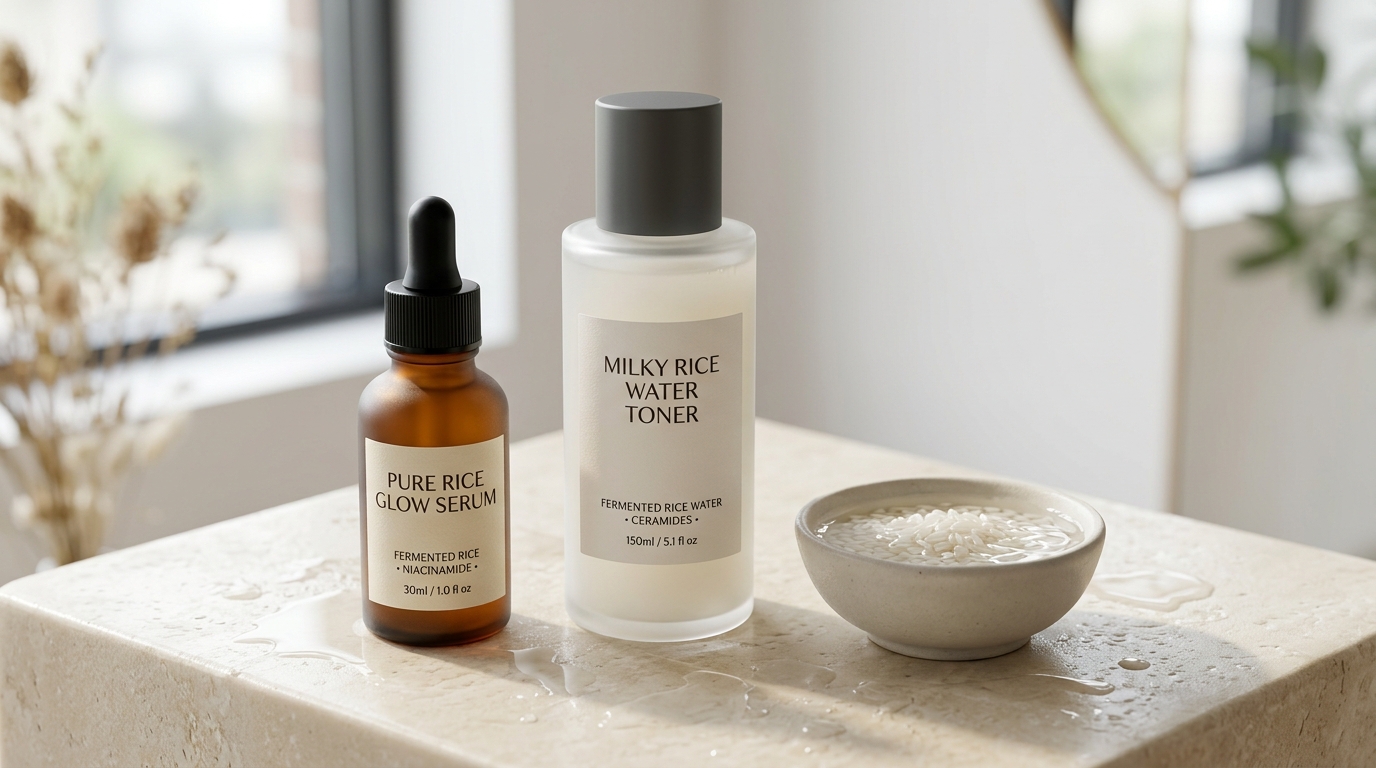
Milky toners—such as Anua Rice 70, TIRTIR Milk Skin, or Thank You Farmer—blend rice water with micro-droplets of ceramides, hydrogenated lecithin, or gentle plant lipids to create a milky, bouncy texture. While exceptional for restoring a peeling skin barrier caused by pharmacy retinoids, milky toners carry higher occlusive risk during Indian summer and monsoon (humidity >75%). If you are prone to fungal acne or closed comedones, heavy milky toners should be reserved for dry winter months or nighttime application only.
Head-to-Head Comparison Matrix: Top 5 Rice Products in India
We evaluated each popular product across key dermatological parameters: primary actives, texture, comedogenicity, Malassezia risk, and Indian retail price per ml.
| Product Name | Key Bioactive Ingredients | Texture & Finish | Fungal Acne Safe? | Best Skin Type | Approx. Price / Size |
|---|---|---|---|---|---|
| Beauty of Joseon Glow Deep Serum | Rice Bran Water 68% + Alpha Arbutin 2% | Lightweight watery serum, non-tacky | 100% Safe | Oily, PIH marks, sensitive | ₹1,250 / 30ml (₹41.6/ml) |
| Plum 3% Niacinamide & Rice Water Toner | Rice Bran Extract + 3% Niacinamide | Bouncy watery liquid, semi-matte | Safe | Oily, open pores, beginners | ₹420 / 150ml (₹2.8/ml) |
| Anua Rice 70 Glow Milky Toner | Rice Water 70% + Ceramides + Niacinamide | Milky essence, dewy finish | Use Caution | Dry, barrier-damaged on retinoids | ₹1,850 / 250ml (₹7.4/ml) |
| Thank You Farmer Rice Pure Toner | Rice Extract 100,000ppm + Centella | Silky viscous essence, soothing | Safe | Combination, active redness | ₹1,799 / 200ml (₹8.9/ml) |
| TIRTIR Milk Skin Toner | Rice Bran Extract + Chamomile + Peptides | Rich milky glaze, intense glow | Congestion Risk | Dry, mature skin (avoid in monsoon) | ₹1,950 / 150ml (₹13.0/ml) |
Not sure whether your skin barrier requires a watery brightening serum or a restorative milky toner? Use our free AI scanner to evaluate your current pore congestion and oil profile in 30 seconds.
In-Depth Product Reviews & Clinical Ingredient Analysis
1. Beauty of Joseon Glow Deep Serum (Rice + Arbutin)
While technically a concentrated serum rather than a basic toner, this Korean formulation is the undisputed clinical gold standard for fading post-inflammatory hyperpigmentation (PIH) left behind by resolved cystic acne.
Dermatological Evaluation: Alpha Arbutin acts as a competitive tyrosinase inhibitor, suppressing melanin synthesis. Paired with 68.6% antioxidant-rich rice bran water, it delivers potent dual-action brightening without the irritation, stinging, or instability of pure 15% L-Ascorbic Acid (Vitamin C). Its water-light texture sinks into Indian skin within 15 seconds, leaving zero residue.
Clinical Verdict: Must-have for anyone dealing with stubborn brown spots and PIH on Fitzpatrick skin types III–V. Sourced via Nykaa, Tira, Kult, or Beauty Barn India.
2. Plum 3% Niacinamide & Rice Water Toner
An exceptional alcohol-free daily toner engineered specifically for the Indian climate. Combines fermented rice water with a clinically proven 3% concentration of Niacinamide.
Dermatological Evaluation: At 3%, Niacinamide sits in the pharmacological sweet spot: high enough to regulate sebum synthesis, tighten the appearance of lax pores, and inhibit melanosome transfer, yet gentle enough to avoid the flushing and redness commonly provoked by harsh 10% Niacinamide serums. The fermented rice base provides instantaneous soothing after cleansing.
Clinical Verdict: The absolute best everyday entry point for teenagers, college students, and working professionals wanting an affordable, non-sticky toner that works seamlessly under Indian sunscreens.
3. Anua Rice 70 Glow Milky Toner
A viral K-Beauty phenomenon containing an astonishing 70% rice water extract fortified with skin-identical ceramides, hyaluronic acid, and panthenol.
Dermatological Evaluation: When patients begin prescription retinoids (Adapalene 0.1% or Tretinoin), they frequently experience retinoid dermatitis: flaking, peeling, burning, and transepidermal water loss. Anua's formulation replenishes intercellular lipid bilayers without stinging. However, because it contains Ceramide NP and trace emulsifying lipids, individuals with active, sebum-drenched fungal acne should avoid using it during high-humidity monsoon months.
Clinical Verdict: Incredible during North Indian winters or as a restorative buffer night on skin cycling routines. Read our Barrier Repair Guide for full protocol.
4. Thank You Farmer Rice Pure Essential Toner
Formulated with rice grown organically on Gyodong Island, Korea, paired with Lotus Flower extract and Centella Asiatica.
Dermatological Evaluation: Exceptional anti-inflammatory profile. Where regular acne toners dry out the skin, the addition of Centella and Lotus suppresses pro-inflammatory cytokines (IL-6 and TNF-alpha), cooling down irritated inflammatory pustules while the rice bioactives gently clarify the complexion.
Clinical Verdict: Outstanding for combination and reactive skin types that react with redness to active acne treatments.
Which Rice Toner Fits Your Specific Acne Profile?
Use this dermatological diagnostic matrix to choose the exact product matched to your present skin condition:
- Very Oily T-Zone + Enlarged Pores: Choose Plum 3% Niacinamide Rice Water Toner. The 3% niacinamide actively downregulates sebum synthesis while keeping pore walls elastic.
- Acne Under Control + Dark Brown Marks (PIH): Choose Beauty of Joseon Glow Deep Serum. Alpha Arbutin 2% halts excess melanin production without triggering irritation.
- Peeling & Flaking from Adapalene / Retinoids: Choose Anua Rice 70 Glow Milky Toner. The ceramides buffer the stratum corneum and restore moisture barrier lipids.
- Active Red Inflammatory Pustules: Choose Thank You Farmer Rice Pure Essential Toner for immediate soothing.
- Prone to Itchy Forehead Bumps (Fungal Acne): Strictly stick to Beauty of Joseon Glow Deep or Plum Toner. Avoid all milky and heavy emulsion toners completely.
Step-by-Step Layering Protocol: Pairing Rice Toners with Acne Actives
Rice toners are exceptionally versatile, but incorrect application order causes pilling or diminishes the penetration of active medications. Follow this dermatologist-approved AM/PM routine:
Morning (AM) Routine: Brightening & Antioxidant Defense
- Gentle Cleanse: Wash face with a non-stripping foaming gel cleanser (e.g., Cetaphil Oily Skin Cleanser or Minimalist Aquaporin Cleanser).
- Rice Toner Application: Pour 3–4 drops of Plum Rice Toner or BOJ Glow Deep Serum into palms. Gently press into slightly damp skin. Wait 60 seconds to absorb.
- Active Treatment (Optional): Apply 1% Zinc PCA or 10% Azelaic Acid for active blemishes.
- Oil-Free Moisturizer: Apply a light gel moisturizer like Sebamed Clear Face Care Gel.
- Broad-Spectrum Sunscreen: Finish with SPF 50 PA++++ matte finish sunscreen. Sunscreen is non-negotiable—UV exposure oxidizes melanin and worsens PIH marks.
Night (PM) Routine: Retinoid Buffering & Cellular Repair
- Double Cleanse: Remove daytime SPF and sebum with micellar water followed by a gentle surfactant cleanser.
- Rice Toner First Layer (The Hydration Cushion): Apply your rice toner. Allow it to absorb fully for 3 to 5 minutes until skin is dry to the touch.
- Prescription Retinoid: Apply a pea-sized amount of Adapalene 0.1% or Tretinoin across the entire face. Never apply retinoids to damp skin.
- Moisture Seal: Lock in hydration with a barrier repair cream containing ceramides or squalane.
Frequently Asked Questions
Yes. Unlike chemical exfoliants (AHA/BHA) or retinoids, lab-formulated rice toners are non-keratolytic and focus on hydration, barrier support, and gentle enzymatic brightening. They can safely be used twice daily (morning and night) without risking over-exfoliation or moisture barrier damage.
Watery rice toners (such as Plum 3% Niacinamide or Beauty of Joseon Glow Deep) absorb completely within seconds and leave a natural, non-greasy semi-matte finish. However, heavy milky toners (like TIRTIR Milk Skin) can leave an overly dewy or glossy film in humid weather. For oily T-zones, always choose water-based formulations.
Clinical improvement in post-inflammatory hyperpigmentation typically requires 4 to 8 weeks of consistent daily usage alongside daily broad-spectrum SPF 50 sunscreen. Products pairing rice bran water with tyrosinase inhibitors like Alpha Arbutin show noticeable fading of brown spots by week 6.
Yes. Beauty of Joseon Glow Deep Serum contains no fatty acids, esters, or oils with carbon chain lengths C12–C24 that feed Malassezia yeast. Its formulation is completely fungal acne safe and suitable for sensitive, congestion-prone skin.
In extremely hot and humid Indian monsoon conditions, individuals with very oily skin can indeed skip heavy creams and use 2 to 3 layers of a milky toner (like Anua Rice 70) as their standalone hydrator before sunscreen. However, for dry or barrier-damaged skin, a true occlusive moisturizer is still recommended to prevent transepidermal water loss.
