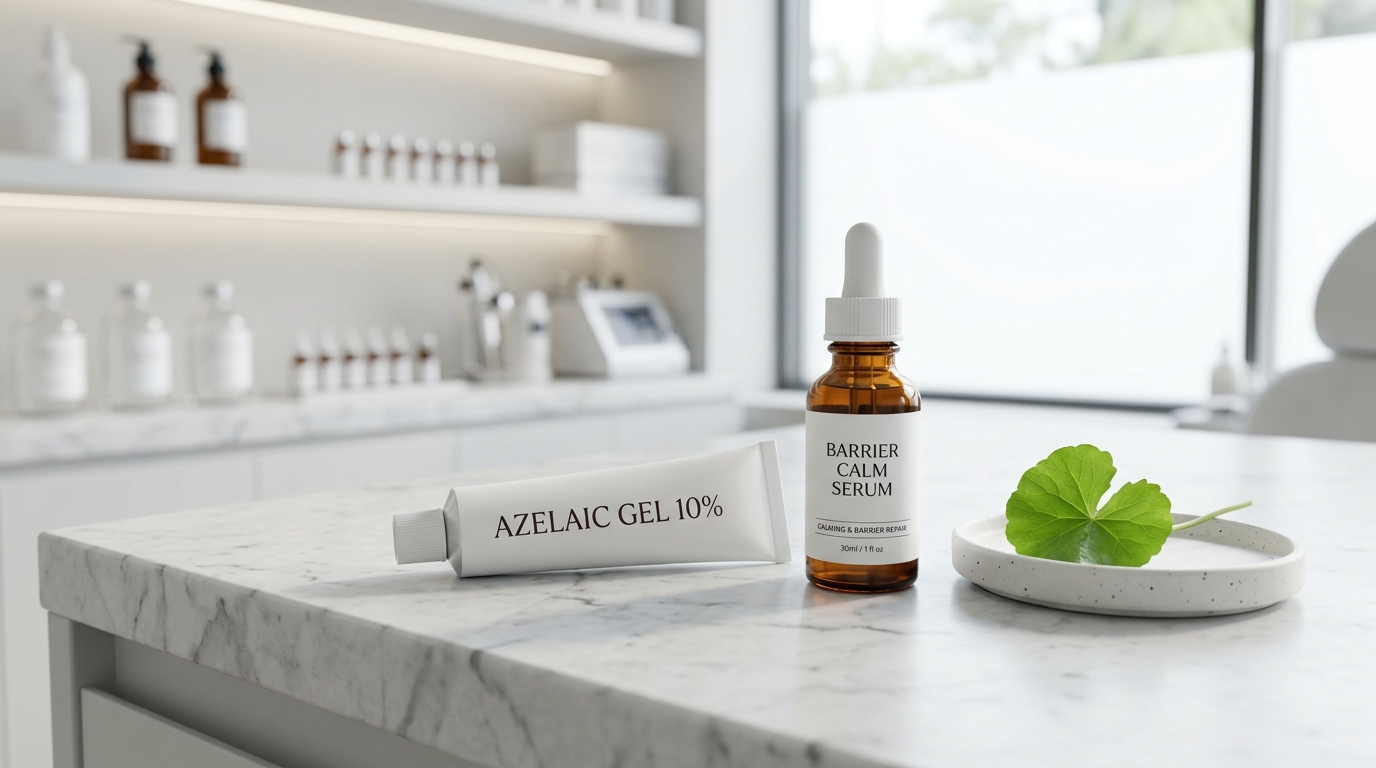
What Is Perioral Dermatitis? The Rash That Masquerades as Acne
Perioral dermatitis (frequently abbreviated as POD, and sometimes called periorificial dermatitis when it extends to the folds of the nose and eyes) is an erythematous, papulopustular facial dermatosis. Despite its appearance, perioral dermatitis is not a form of bacterial acne.
Because the bumps of perioral dermatitis are small, red, and often develop pinhead-sized white micro-pustules, over 80% of patients in India mistakenly assume they are experiencing "sudden hormonal chin acne" or a "menstrual breakout." Acting on this false diagnosis, they reach for acne spot treatments — triggering a catastrophic worsening of the rash.
🚨 The Cardinal Rule of POD: If your bumps itch, burn, or sting like sandpaper, and flare up red and angry after applying benzoyl peroxide or salicylic acid, stop treating it like acne immediately. You are inflaming a compromised epidermal barrier.
Diagnostic Checklist: Perioral Dermatitis vs Hormonal Chin Acne vs Rosacea
Differentiating perioral dermatitis from hormonal adult acne and papulopustular rosacea is straightforward once you know which clinical hallmarks to look for. Use this 7-point diagnostic matrix:
| Diagnostic Feature | Perioral Dermatitis (POD) | Hormonal Chin Acne | Papulopustular Rosacea |
|---|---|---|---|
| The "Vermilion Border" (Lip Margin) | SPARED: Clear 2–3 mm ring of normal skin around lips | NOT spared: Pimples occur right on lip line | Spared, but rash centers on central cheeks & nose |
| Presence of Comedones (Blackheads / Whiteheads) | ABSENT: Zero blackheads or clogged pore plugs | PRESENT: True whitehead/blackhead plugs visible | ABSENT: No comedones |
| Primary Sensation | Intense burning, stinging, itching, tight sandpaper feel | Deep throbbing, pressure, tenderness when touched | Flushing, facial heat, warmth after spicy food/tea |
| Lesion Appearance | Monomorphic (uniform, pinhead-sized red papules/micro-pustules) | Polymorphic (mixture of small whiteheads, large cysts, nodules) | Red papules/pustules with background telangiectasia (red veins) |
| Reaction to Salicylic Acid / BPO | Severe burning, fiery redness, peeling explosion | Gradual drying, reduction in pustule size over days | Irritation and increased facial flushing |
| Reaction to Topical Steroid (Betnovate) | Temporary relief for 48 hrs → violent rebound flare | Minimal effect or causes "steroid acne" pustules | Temporary vasoconstriction → violent rebound flare |
| First-Line Clinical Solution | Zero Therapy + Topical Metronidazole / Azelaic | Adapalene 0.1% + Benzoyl Peroxide / Spironolactone | Ivermectin cream + oral Doxycycline |
🔍 What Is "Vermilion Border Sparing"? Look closely in the mirror at your lips. If there is a distinct, pale, healthy strip of normal skin (approx. 2 to 3 millimeters wide) directly between your pink lip border and where the red bumpy rash starts, that is the classic pathognomonic sign of perioral dermatitis. Acne vulgaris does not respect this anatomical boundary.
Why Standard Acne Actives Make Perioral Dermatitis Explode
When patients believe they have stubborn chin acne, their instinct is to bring out their strongest keratolytic and antibacterial weapons. In perioral dermatitis, this creates chemical devastation:
The Indian Steroid Trap: Betnovate, Panderm & the Rebound Nightmare
In Indian dermatology clinics, over 60% of all severe perioral dermatitis cases are directly caused by topical corticosteroid abuse. Due to lax over-the-counter pharmacy dispensing, potent topical steroids are widely sold as "miracle fairness creams" or "quick pimple erasers."
⚠️ Common Indian Offending Creams: Betnovate-C / Betnovate-N (Betamethasone), Panderm / Panderm Plus (Clobetasol), Quadriderm, Skinlite (Hydroquinone + Tretinoin + Mometasone), and Dermiford. None of these creams are licensed for facial acne or general rashes.
The Vicious Cycle of Steroid Addiction
Initial Application & The "False Miracle"
The patient applies Betnovate or Panderm to a minor chin bump. The potent corticosteroid constricts blood vessels (vasoconstriction) and suppresses local immune function. Within 24 hours, all redness disappears. The patient believes they found a cure.
Epidermal Thinning & Follicular Disruption
Over weeks of continuous use, the steroid halts collagen synthesis and atrophies the epidermis. Natural skin defense peptides collapse, and local cutaneous mites (Demodex folliculorum) and bacteria multiply unchecked inside damaged hair follicles.
The Rebound Explosion
The patient stops the cream. Without artificial vasoconstriction, blood vessels dilate violently. Within 48 to 72 hours, a ferocious rebound flare erupts: hundreds of tiny burning red pustules, tight weeping skin, and extreme edema. Panicked, the patient reapplies the steroid — becoming medically addicted.
If you are currently trapped in this cycle, explore our dedicated Steroid-Damaged Skin (Betnovate/Panderm) Recovery Protocol. Breaking free requires a supervised dermatological transition to non-steroidal anti-inflammatories.
"Zero Therapy" (Null-Therapie): The 3-Phase Elimination Protocol
In European dermatology, the gold-standard initial treatment for mild-to-moderate perioral dermatitis is known as Null-Therapie (Zero Therapy). It sounds counter-intuitive to anyone used to a 10-step skincare routine, but in clinical studies, doing absolutely nothing clears over 50% of perioral dermatitis cases without any medication.
What to use: Wash your face with lukewarm drinking/RO water only. Gently pat dry with a fresh, clean microfiber cloth or clean paper towel. Do not rub.
Critical rule: Do NOT panic and apply moisturizer! Applying moisturizer will immediately reignite the pustules. Endure the dryness; it is the sign of healing.
Brushing technique: Brush your teeth BEFORE washing your face. Immediately wash your chin and mouth area with water to ensure zero toothpaste residue remains on the skin.
Sun protection: Wear a broad-brimmed cotton hat, use a UV umbrella, or stay in the shade during peak Indian UV hours (11:00 AM to 3:30 PM).
Medical Treatments in India: Topicals & Prescriptions That Actually Work
If Zero Therapy alone does not bring noticeable relief within 14 days, or if your POD was induced by steroid withdrawal, dermatological medical intervention is required. Indian pharmacies stock effective, non-steroidal topical and oral treatments:
| Medical Treatment | Common Indian Brand Names | Mechanism of Action | Role in POD Recovery |
|---|---|---|---|
| Topical Metronidazole 0.75% / 1% Gel | Metrogyl Gel (J.B. Chemicals), Rozat Gel | Antibacterial, antiprotozoal & potent anti-inflammatory; downregulates reactive oxygen species | First-Line Gold Standard Applied twice daily; well-tolerated on sensitive skin |
| Topical Azelaic Acid 10% – 15% Gel | Aziderm Gel (Micro Labs), Picspot Gel | Inhibits follicular hyperkeratinization, suppresses kallikrein-5 / cathelicidin inflammatory cascade | Top Pick for Brown Skin Calms active pustules AND prevents dark PIH marks simultaneously |
| Topical Calcineurin Inhibitors (Tacrolimus 0.03% / Pimecrolimus 1%) | Tacroz Ointment (Glenmark), Pacroma Cream | Non-steroidal T-cell immunomodulator; suppresses IL-2 without causing skin atrophy | Crucial for Steroid Rebound Eliminates intense steroid withdrawal flares safely |
| Topical Ivermectin 1% Cream | Iverheal Cream, Soolantra (Import) | Antiparasitic & anti-inflammatory; reduces Demodex mite density in follicles | For Resistant / Rosacea-Type POD |
| Oral Doxycycline 100mg / Minocycline 50mg | Doxicip, Doxy-1 L-DR Forte | Sub-antimicrobial anti-inflammatory action; downregulates neutrophil chemotaxis | For Severe / Widespread POD Prescribed for 4 to 8 weeks by dermatologists |
⚠️ Prescription Notice: The medical treatments listed above must be evaluated and prescribed by a qualified dermatologist. Never self-medicate with oral antibiotics or immunosuppressive ointments without clinical oversight.
Fading the Dark Shadow: The Fitzpatrick III–VI PIH Recovery Protocol
For Indian skin tones (Fitzpatrick phototypes III to VI), clearing the active red pustules is only half the battle. Because the perioral area experiences intense mast cell inflammation, it frequently leaves behind a dark, grayish-brown circular "shadow" or hyperpigmented ring around the mouth (Post-Inflammatory Hyperpigmentation / PIH).
How to Safely Fade Perioral PIH Without Triggering a Flare
Wait for Zero Active Bumps (The "Quiescent" Rule)
Never start aggressive brightening agents while your skin still has active red bumps, itching, or peeling. Attempting to fade marks on active POD will trigger an immediate relapse. Wait until the skin has been completely calm and bump-free for at least 14 consecutive days.
Use Azelaic Acid 10% as Your Primary Fading Agent
Unlike glycolic acid or vitamin C (which have low pH and sting perioral skin), Azelaic Acid 10% specifically targets abnormal, hyperactive melanocytes without inhibiting normal pigment cells. It has strong anti-inflammatory properties, making it the only active that treats PIH while actively shielding against a POD relapse.
Introduce Pure Mineral Sunscreen (Zinc Oxide 15%+)
Once the acute flare is resolved, protect the healing perioral skin with an all-mineral (physical) sunscreen containing Zinc Oxide and Titanium Dioxide. Zinc oxide is inherently soothing and anti-inflammatory. It reflects UV-A rays that darken post-inflammatory melanin.
Barrier Rebuilding with Centella Asiatica & Ceramides
Incorporate a water-gel moisturizer containing Centella Asiatica (Cica / Madecassoside) and physiological ceramides. Centella upregulates collagen I synthesis, strengthens fragile perioral capillaries, and accelerates epidermal regeneration.
Frequently Asked Questions (FAQ)
Yes. Perioral dermatitis is completely curable. Once active triggers (such as topical steroids, SLS toothpastes, and heavy occlusives) are permanently eliminated, and the skin barrier is allowed to heal with Zero Therapy or medical topicals like Metronidazole, the condition typically clears completely within 4 to 8 weeks without recurring.
Check for three distinct signs: First, look for the 'vermilion border sparing' sign — perioral dermatitis leaves a clear 2–3 mm ring of normal, unblemished skin immediately surrounding the lips, whereas acne often occurs right on the lip margin. Second, perioral dermatitis has NO true comedones (blackheads or hard whitehead plugs). Third, perioral dermatitis burns, stings, or itches intensely and flares up worse after applying acne acids like salicylic acid or benzoyl peroxide.
Stopping a potent topical corticosteroid abruptly after weeks of use usually triggers a 'rebound flare' within 48 to 72 hours: intense redness, burning, swelling, and an eruption of hundreds of tiny pustules. Dermatologists manage this transition by substituting non-steroidal anti-inflammatory topicals (such as Tacrolimus 0.03% ointment or Metronidazole gel) alongside a short course of oral Doxycycline to cushion the withdrawal process.
Switch immediately to an SLS-free (Sodium Lauryl Sulfate-free) toothpaste. Good options available in India include Curaprox Enzycal, Sensodyne Daily Care Gentle Whitening (SLS-free formulation), or gentle Ayurvedic SLS-free herbal tooth gels. Always brush your teeth BEFORE washing your face, and rinse your chin thoroughly with clean water afterwards.
No. Coconut oil is highly occlusive and comedogenic; applying it over perioral dermatitis traps heat and cutaneous flora, causing the pustules to multiply rapidly. While pure aloe vera has soothing properties, commercial packaged aloe vera gels in India often contain fragrance, alcohol, and triethanolamine, which sting raw, compromised skin. Stick strictly to Zero Therapy (lukewarm water only) during the acute phase.
Zero Therapy typically takes 2 to 4 weeks. Days 3 through 10 are often the most uncomfortable because the skin feels extremely tight, dry, and flaky as damaged cells peel away. However, by week 2, active redness and burning subside significantly, and micro-pustules flatten into dry crusts that wash away naturally.
Perioral dermatitis rarely causes true pitted scars unless the patient aggressively picks, scratches, or uses needles to squeeze the pustules. However, on Indian skin (Fitzpatrick phototypes III–VI), it frequently leaves Post-Inflammatory Hyperpigmentation (PIH) — a dark brownish shadow or ring around the mouth. This PIH fades over 2 to 4 months once the rash clears, especially when supported by Azelaic acid and physical sun protection.
You should consult a dermatologist immediately if: (1) Your rash is spreading to the eyelids or around the eyes (periocular involvement); (2) You have been using steroid creams like Betnovate or Panderm and cannot stop without a flare; (3) The rash is oozing, crusting yellow, or throbbing with severe pain (signs of secondary bacterial infection); or (4) Zero Therapy brings no improvement after 14 days.
