
Retinoid Dermatitis: Why Tretinoin Causes Peeling & Burning on Indian Skin
Starting Tretinoin (Retino-A, Tretiheal, A-Ret Gel) is a cornerstone of dermatological acne and anti-aging management. However, over 70% of first-time users in India experience the dreaded "Tretinoin Uglies" within the first 2 to 4 weeks: severe flaking around the perioral area (mouth corners), tight parchment-like skin, and an intense stinging sensation even when applying plain water or gentle lotion.
🚨 BIOLOGICAL MECHANISM: Tretinoin binds directly to retinoic acid receptors (RAR-gamma) in the cell nucleus, accelerating cellular mitosis and stratum corneum desquamation by up to 300%. When immature corneocytes reach the skin surface before synthesizing sufficient natural intercellular lipids (ceramides, cholesterol, free fatty acids in the vital 3:1:1 ratio), your protective brick-and-mortar barrier collapses.
This causes massive Transepidermal Water Loss (TEWL). On melanin-rich Indian skin (Fitzpatrick Types III–VI), persistent barrier inflammation activates hyperactive melanocytes, rapidly converting temporary retinoid redness into stubborn, dark brown post-inflammatory hyperpigmentation (PIH) that can take 6 months to fade.
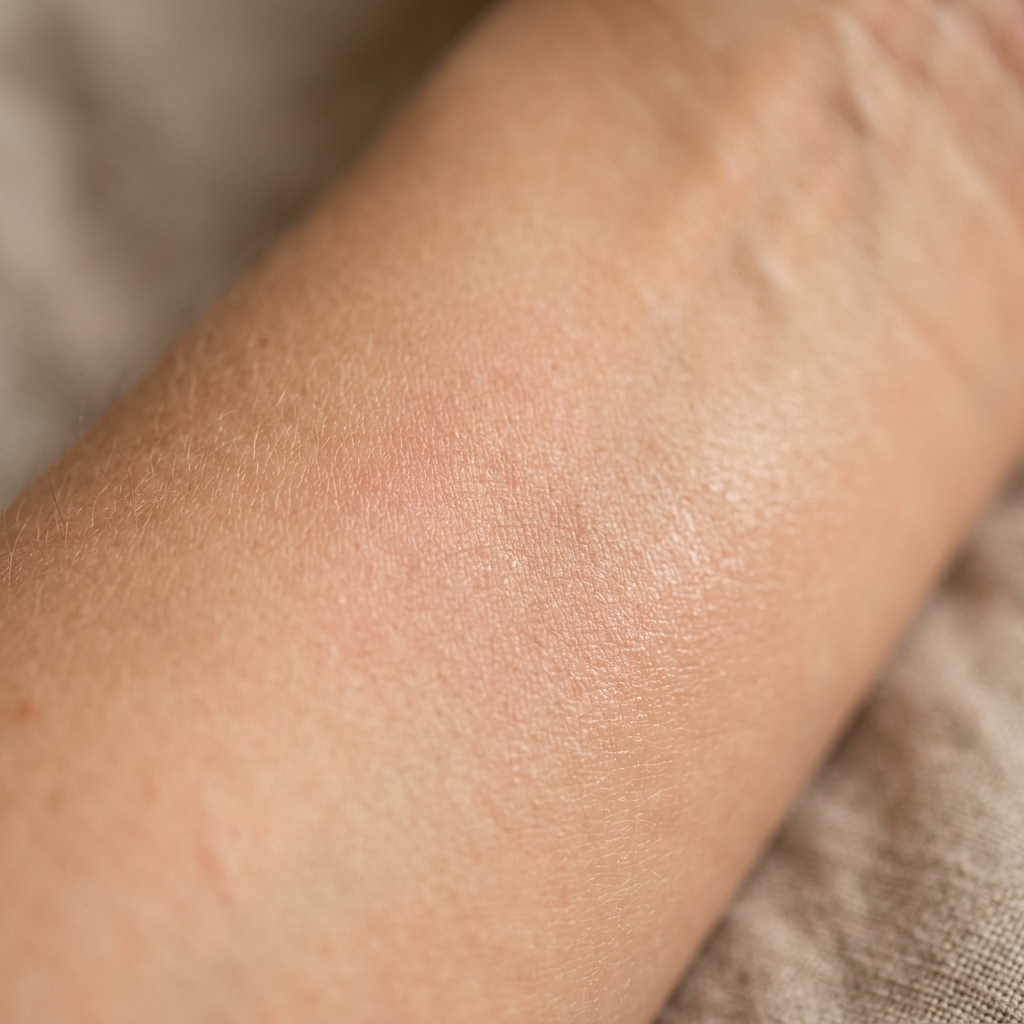
Diagnostic Matrix: Is It a True Tretinoin Purge or Chemical Barrier Collapse?
Continuing to apply Tretinoin through a normal purge will clear your pores, but applying Tretinoin over a destroyed lipid barrier will cause chemical ulcerations and severe PIH. Use this clinical differential matrix to pinpoint your exact situation:
| Diagnostic Feature | True Retinoid Purge ✅ (Keep Going) | Chemical Barrier Collapse 🚨 (STOP Immediately) |
|---|---|---|
| Breakout Location | In usual acne-prone zones (chin, jawline, forehead) where microcomedones existed. | In new, completely random areas (upper cheeks, under eyes, around mouth). |
| Skin Texture & Finish | Normal between blemishes; minor localized peeling near active spots. | Tight, shiny, wax-like "plastic wrap" texture; widespread crepey flaking. |
| Sensory Sensation | Normal; occasional tender pimple bump. | Intense stinging/burning when applying plain water, basic lotion, or SPF. |
| Lesion Characteristics | Whiteheads and small inflammatory papules that come to a head and heal quickly (3–5 days). | Diffuse redness (erythema), burning rash, micro-blisters, or raw rough patches. |
| Underlying Cause | Rapid expulsion of pre-existing subclinical microcomedones. | Depletion of intercellular ceramides & acid mantle rupture (TEWL spike). |
| Immediate Action | Maintain schedule (2–3x/wk) using the Sandwich Method. | Initiate 72-Hour SOS Barrier Reset; ZERO actives. |
The 72-Hour SOS Barrier Reset Protocol (Zero-Active Rescue)
When your skin barrier is burning and peeling, applying any active (Retinoids, Salicylic Acid, Vitamin C, Glycolic Acid, or Niacinamide above 2%) is like pouring gasoline on a fire. Follow this 3-day clinical reset:
Action: Immediately halt Tretinoin, exfoliants, clay masks, foaming washes, and physical scrubs. Store them away for a minimum of 72 hours (or until burning on water contact drops to zero).
Action: In the morning, rinse with cool water only. In the evening, use a non-foaming, soap-free cleansing lotion (e.g. Cetaphil Gentle Skin Cleanser or Bioderma Sensibio Micellar Water). Do not rub with towels.
Action: Apply a thick layer of a therapeutic ceramide-dominant barrier cream (e.g. Physiogel Hypoallergenic AI Cream, Biosilk Moisturizing Cream, or Bioderma Atoderm Baume). Reapply mid-day if tightness returns.
Action: Before bed, dab a thin layer of pure white petroleum jelly (Vaseline) or a zinc barrier paste (e.g. Sudocrem or Cipla Cicalfate) over the raw, peeling perioral areas to seal in moisture and block TEWL overnight.
Interactive Diagnostic Tool: Tap Any Card to Flip
Identify Your Exact Retinoid Reaction Profile
Tap any of the 4 clinical scenarios below to flip the card and reveal its biological mechanism, targeted recovery pick, and safety rule:
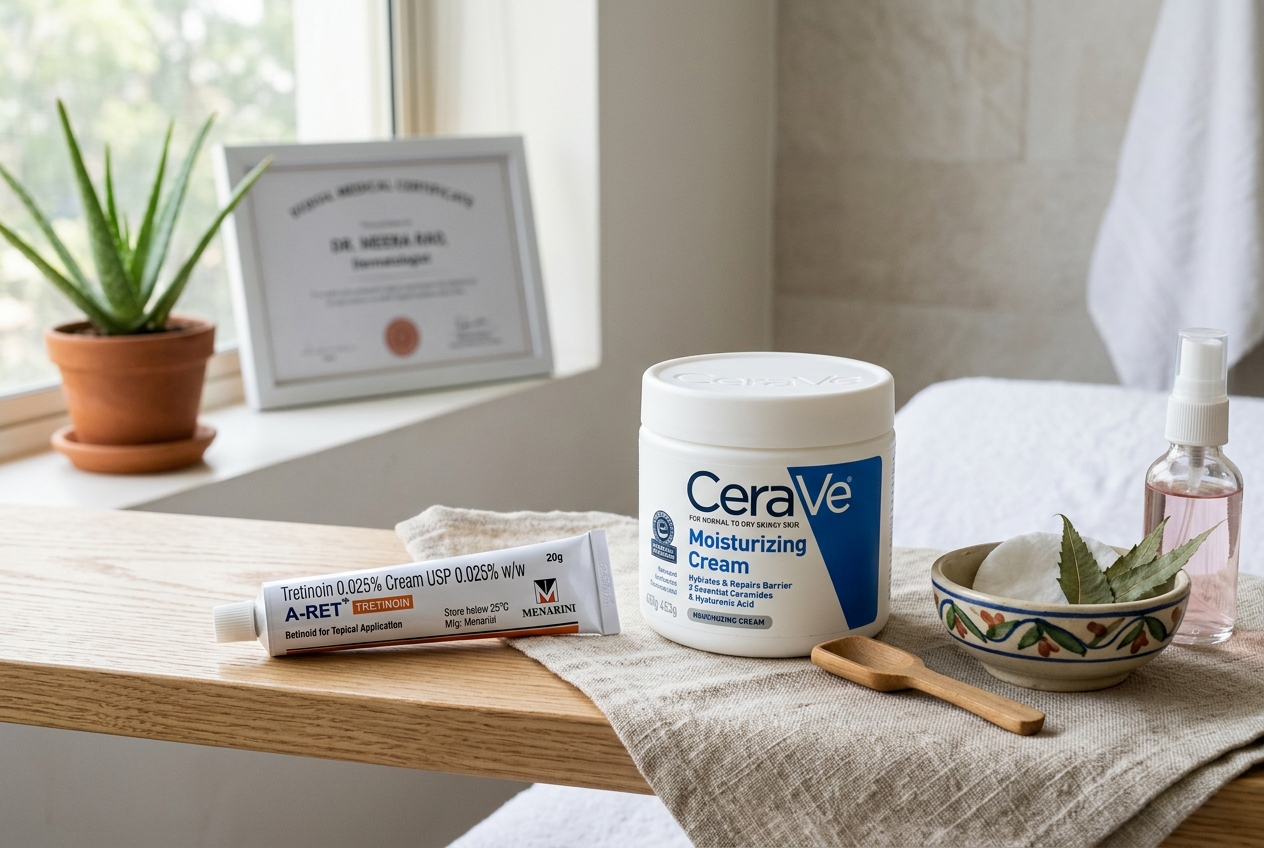
Retinoid Dermatitis Flaking
Raw peeling around mouth and chin with intense stinging whenever any moisturizer or sunscreen is applied.
Tap to Reveal Match 🔄Physiological Lipid Barrier Repair
Immature epidermal cells reached the stratum corneum without sufficient lipid matrix. Replenish ceramides with physiological AI creams and pause Tretinoin immediately.
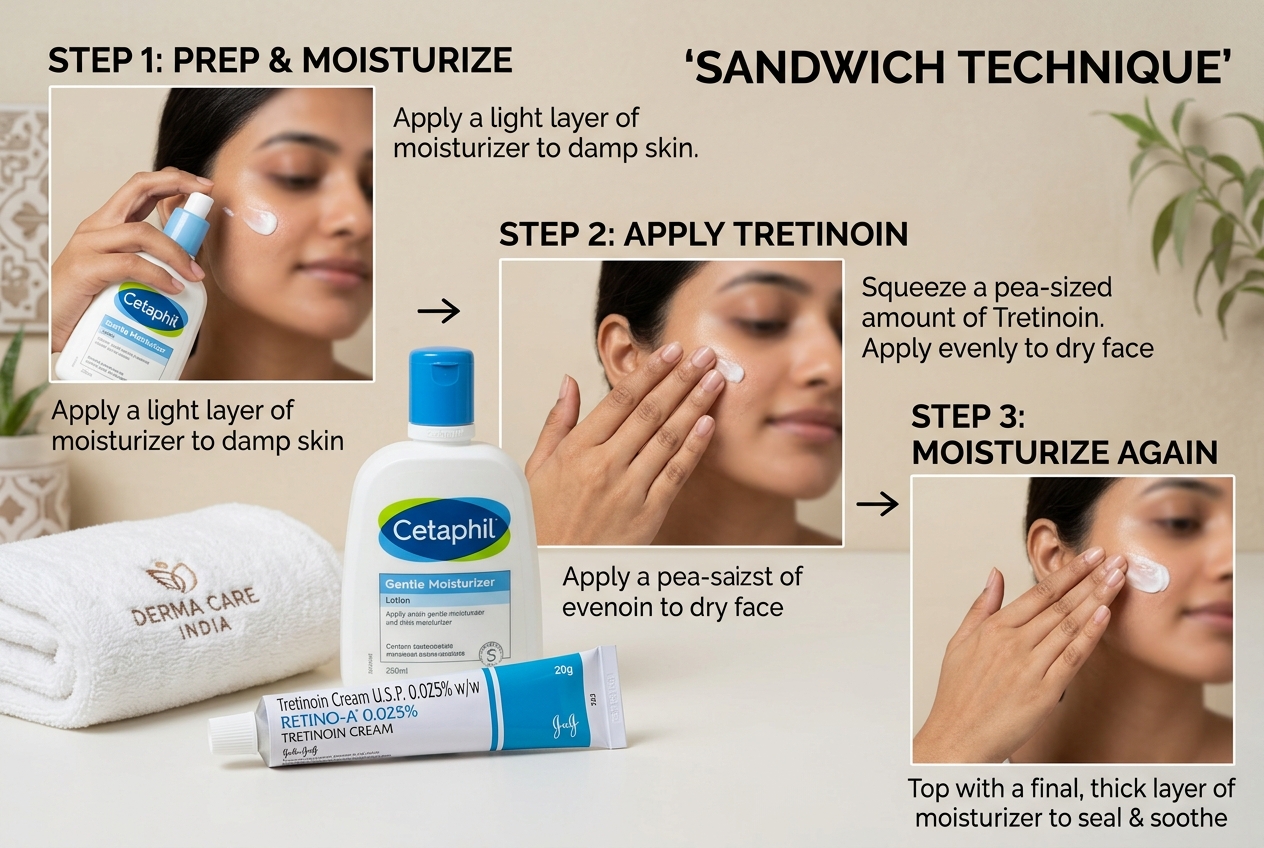
The Sandwich Buffer Method
How to achieve 100% retinoid cellular benefits while eliminating peeling and barrier irritation.
Tap to Reveal Match 🔄Moisturize → Retinoid → Moisturize
The initial moisturizer layer slows retinoic acid diffusion into deeper follicular receptors, smoothing the biological absorption curve without reducing final anti-acne efficacy.
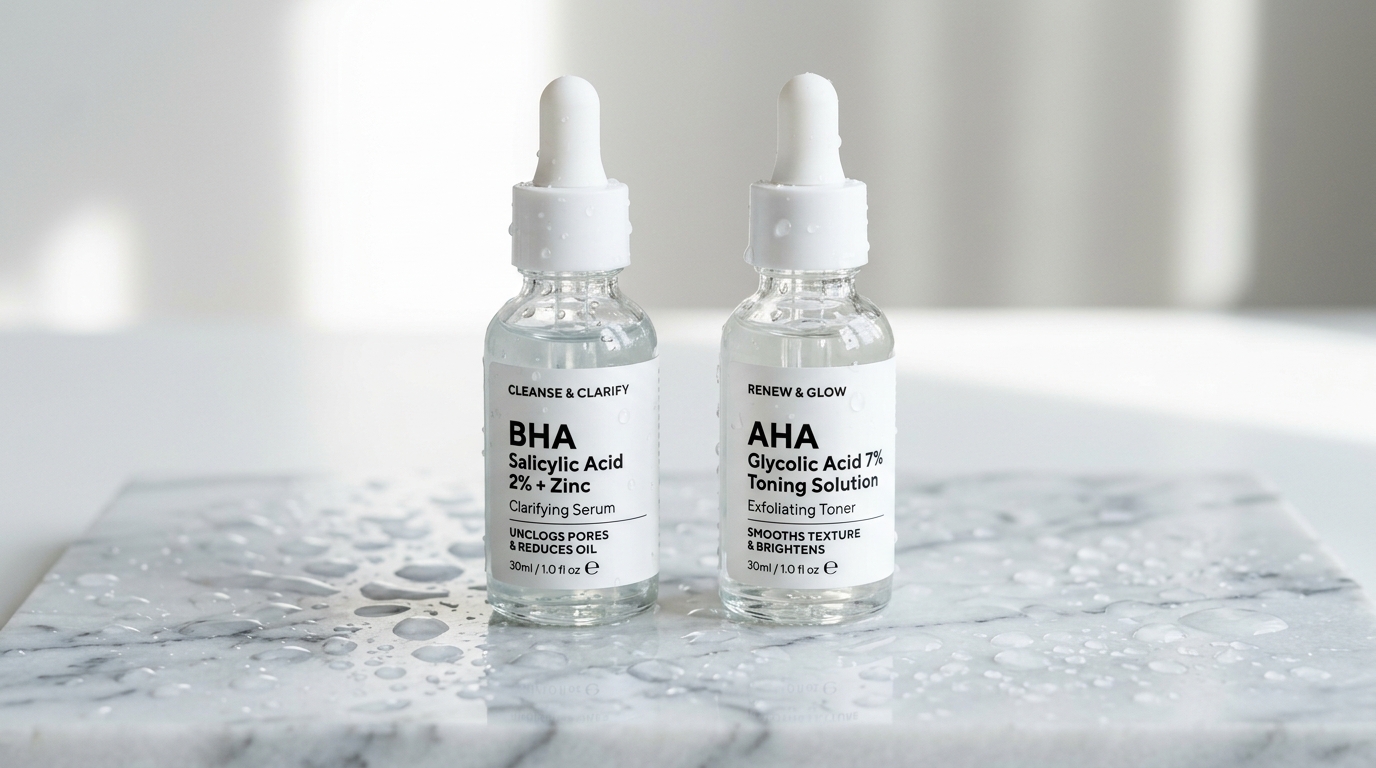
True Purge vs Chemical Burn
Rapid surface breakout of whiteheads in existing acne zones with zero burning sensation.
Tap to Reveal Match 🔄Maintain Schedule with Hydration
Subclinical microcomedones are being expelled simultaneously as the stratum corneum thins. Do not quit; this signals that retinoic receptors are active and functional.
Emergency 72h SOS Reset
Zero actives, cool water cleanse, and continuous ceramide replenishing until stinging halts.
Tap to Reveal Match 🔄Absolute Zero-Active Barrier Reset
Complete cessation of chemical exfoliants allows the acid mantle (pH 5.5) and lamellar lipid bilayers to regenerate naturally before retinoic therapy resumes.
The Definitive Sandwich Method for Indian Fitzpatrick III–VI Skin
The "Sandwich Technique" is the gold-standard method prescribed by dermatologists across India to build retinoic tolerance without the peeling cascade:
After washing your face with a gentle cleanser, pat skin 100% dry and immediately apply a thin layer of a non-comedogenic, ceramide-rich moisturizer. Wait 10 to 15 minutes.
Dispense exactly one pea-sized dot of Tretinoin 0.025% (or Adapalene 0.1%). Dot it across forehead, cheeks, and chin. Blend outward gently. Avoid the eye contours, corners of the nose, and lips.
Wait 5 minutes for the retinoid to set, then apply a second layer of your barrier moisturizer on top. This locks the active in place while buffering the epidermal surface against excessive TEWL.
Top Indian Pharmacy Barrier Recovery Creams
Indian pharmacies offer incredible, cost-effective medical barrier formulations that outperform expensive luxury moisturizers for retinoid recovery:
Formulation: Formulated with Palmitamide MEA (PEA) and physiological lipids that mimic natural skin bilayer structures to stop stinging instantly.
Formulation: Combines pure ceramides, cholesterol, and colloidal oatmeal to rapidly rebuild stripped stratum corneum bilayers.
Formulation: Restores biological barrier integrity while PEA actively calms severe itching and neurogenic burning sensations.
Formulation: Lightweight, non-greasy lotion that provides zero-sting daytime hydration alongside broad-spectrum UV protection.
The Retinoid Ladder: How to Re-Introduce Tretinoin Safely
Once your barrier has completely healed and water no longer stings, re-introduce Tretinoin using this progressive micro-dosing ladder:
| Stage | Timeline | Application Frequency | Buffering Protocol |
|---|---|---|---|
| Stage 1 (Acclimatization) | Weeks 1–2 | 1 Night Every 4 Days (e.g. Monday & Friday only) | Strict Sandwich Method with Physiogel / Biosilk. |
| Stage 2 (Tolerance Building) | Weeks 3–4 | Every 3rd Night (e.g. Mon, Thu, Sun) | Sandwich Method; monitor perioral flaking. |
| Stage 3 (Stabilization) | Weeks 5–8 | Alternate Nights (3x/week) | Single moisturizer layer underneath Tretinoin. |
| Stage 4 (Maintenance) | Week 9+ | 4–5 Nights Weekly (or Skin Cycling: 1 Exfoliate, 1 Retinoid, 2 Recovery) | Direct Tretinoin on dry skin followed by moisturizer. |
6 Dangerous Retinoid Mistakes That Cause Severe Burns in India
Wet skin is 3x to 5x more permeable than dry skin. Applying Tretinoin immediately after washing forces rapid, deep transfollicular absorption, triggering acute chemical burns and massive peeling.
Scrubbing peeling flakes off with abrasive beads tears raw, newly exposed epidermal cells, causing micro-lacerations and permanent post-inflammatory hyperpigmentation (PIH).
Tretinoin thins the protective stratum corneum. Going outdoors in the intense Indian sun without SPF 50 will cause immediate solar erythema, dark melasma-like patches, and photodermatitis.
Higher concentrations do not clear acne faster; they only amplify irritation exponentially. Always begin with Tretinoin 0.025% cream or Adapalene 0.1% gel for the first 3 to 6 months.
Stacking strong chemical exfoliating acids directly on top of retinoic acid strips all natural lipid bilayers, guaranteeing severe retinoid dermatitis within 48 hours.
Applying 100% Vaseline directly over Tretinoin creates an airtight occlusion chamber, trapping the potent active and increasing its penetration by up to 400%, leading to intense chemical peeling.
Frequently Asked Questions: Tretinoin Peeling & Recovery
When using the Sandwich Method and starting with a 2x/week schedule, mild flaking usually peaks between weeks 2 and 4, subsiding completely by week 6 to 8 as epidermal cells adapt to the accelerated turnover rate. If severe peeling and burning persist beyond 8 weeks, you are likely using too high a concentration or over-cleansing.
A burning sensation upon applying plain lotion is the definitive clinical indicator of a compromised stratum corneum (ruptured skin barrier). When intercellular ceramides and fatty acids are depleted by excessive retinoid use, external ingredients reach exposed nerve endings directly in the lower epidermis. Pause all actives immediately for 72 hours and switch to a physiological barrier cream like Physiogel AI.
Yes, but only in low, physiological concentrations (2% to 5%). Niacinamide stimulates endogenous ceramide synthesis and suppresses pro-inflammatory cytokines. However, high-strength 10% serums can cause additional flushing and stinging on an actively broken barrier. Ensure your barrier cream contains buffered, soothing Niacinamide.
For dry, sensitive, or beginner skin experiencing peeling, Tretinoin Cream (e.g. Retino-A 0.025% cream) provides an emollient lipid base that minimizes dryness. For extremely oily skin living in high monsoon humidity, microsphere gel formulations (e.g. Supatret 0.04% Aqueous Gel) release retinoic acid slowly over several hours, preventing acute irritation peaks without heavy greasy waxes.
Create a protective "buffer zone" before applying your retinoid. Smooth a small dab of pure white petroleum jelly (Vaseline) or thick ceramide balm directly over the nasolabial folds, corners of the mouth, under-eye hollows, and alar creases of the nose. This prevents the retinoid from migrating into delicate facial folds during sleep.
No. Manually scrubbing or peeling dead skin flakes forces premature detachment of partially anchored corneocytes, leading to open micro-fissures and severe post-inflammatory hyperpigmentation (PIH). Instead, apply a thick layer of barrier cream; the dead flakes will naturally hydrate and roll away gently during normal evening lukewarm cleansing.
Darkening following retinoid peeling is Post-Inflammatory Hyperpigmentation (PIH) caused by UV exposure on inflamed skin. Pause Tretinoin, apply broad-spectrum SPF 50 sunscreen diligently every 2.5 hours outdoors, and incorporate soothing 15% Azelaic Acid (Aziderm) or 3% Tranexamic Acid once the acute burning has fully resolved.
Wait at least 8 to 12 weeks after starting Tretinoin before introducing secondary actives. Your skin barrier must be 100% resilient with zero peeling, redness, or burning. When ready, introduce Vitamin C only in your morning routine and keep your evening dedicated to either Tretinoin or barrier recovery (using the 4-night skin cycling framework).