What Is Facial Keratosis Pilaris? The "Sandpaper Cheek" Reality
While most people associate Keratosis Pilaris (KP, commonly called "chicken skin") with the backs of the upper arms and thighs, it frequently presents on the face — a presentation known clinically as Keratosis Pilaris Faciei or Keratosis Pilaris Rubra Faciei.
Because each hair follicle on the outer cheeks is capped by a tiny keratin plug, the entire cheek feels like rough grit or 120-grit sandpaper when touched. Unlike acne, there is no bacterial infection, no true pus core, and no pore opening to squeeze. It is simply pure keratin protein trapped in a dry follicle.
⚠️ The Seasonal Indian Flare: In India, facial KP becomes significantly rougher, drier, and itchier during dry North Indian winters (November to February) or when spending prolonged hours in air-conditioned office spaces. In hot, humid monsoon weather, the bumps often soften slightly as ambient humidity temporarily hydrates the stratum corneum.
Diagnostic Matrix: Facial KP vs Closed Comedones vs Acne Vulgaris
Mistaking facial Keratosis Pilaris for closed comedones or cheek acne leads people to use drying acne washes that make the rough bumps tighter and more inflamed. Use this 3-way clinical matrix to identify your exact cheek texture:
| Diagnostic Feature | Facial Keratosis Pilaris (KP) | Closed Comedones (Whiteheads) | Inflammatory Acne Vulgaris |
|---|---|---|---|
| Tactile Feel | Rough, gritty sandpaper feel | Small, smooth, rubbery bumps | Tender, swollen, throbbing bumps |
| Facial Distribution | Bilateral symmetrical outer cheeks & temples | Forehead, chin, jawline, T-zone | Scattered randomly on cheeks, jaw, chin |
| Skin Type Context | Inherently dry, sensitive, or eczema-prone | Combination or oily skin | Oily, high sebum production |
| Contents Inside Bump | Hard, dry, laminated keratin plug | Soft sebum core + dead skin cells | Inflammatory pus, sebum & C. acnes |
| Reaction to Squeezing | Will NOT pop; bruising & brown PIH | Evacuates a stringy white sebum plug | Discharges pus/blood; forms scab |
| Reaction to Salicylic Acid 2% | Increased dryness, redness & roughness | Gradual unclogging over 6–8 weeks | Clears pustules and reduces redness |
| Gold-Standard Remedy | Urea 5%–10% + Lactic Acid + Ceramides | Salicylic Acid 2% + Adapalene 0.1% | Benzoyl Peroxide 2.5% + Adapalene |
🔍 Check the Bilateral Symmetry: Keratosis Pilaris almost always affects both cheeks identically in a mirror-image pattern (extending from in front of the ears across the high cheekbones). If you have 50 tiny bumps on your left cheek, you will almost certainly have the exact same sandpaper texture on your right cheek. Acne is rarely symmetrical.
The Apricot & Walnut Scrub Trap: Why Physical Scrubbing Makes KP Explode
Because facial KP feels like rough texture, the first instinct of almost every Indian teenager and adult is to reach for a physical exfoliating face scrub — most notoriously, mass-market walnut or apricot shell scrubs (like Everyuth or Himalaya). In clinical dermatology, this is the worst possible action:
🚨 Strict Dermatology Rule: Discard all physical face scrubs, cleansing brushes, and coarse washcloths immediately. Keratin plugs cannot be buffed away with grit — they must be dissolved gently with chemical keratolytics that hydrate while they exfoliate.
The Facial Keratolytic Blueprint: Urea vs Lactic Acid vs Salicylic Acid
To smooth facial KP, you need a keratolytic agent that dissolves the hard protein bonds holding the keratin plug together, without stripping the lipid moisture barrier of an already dry face:
| Keratolytic Active | Ideal Facial Concentration | How It Works on KP Plugs | Impact on Skin Hydration |
|---|---|---|---|
| Urea | 5% to 10% (Facial Safe) | Breaks hydrogen bonds in hardened keratin proteins, causing the plug to unfold and dissolve naturally. | Potent Humectant (Attracts Water) Acts as a Natural Moisturizing Factor (NMF); hydrates deeply. |
| Lactic Acid (AHA) | 5% to 10% | Large molecular weight alpha-hydroxy acid that gently dissolves intercellular desmosomes on the surface. | Hydrating Exfoliant Stimulates endogenous ceramide synthesis in the stratum corneum. |
| Salicylic Acid (BHA) | 0.5% to 1% (Low Strength) | Oil-soluble acid that penetrates sebaceous ducts. Dissolves keratin but dries out surface lipids. | Drying on KP Skin Helpful for oily acne, but can worsen dry filaggrin-deficient KP if used at 2%. |
| Encapsulated Retinol | 0.2% to 0.3% | Normalizes keratinocyte differentiation in the basal layer, preventing cells from compacting into plugs. | Neutral / Mild Peeling Excellent for long-term maintenance; must be introduced slowly. |
💡 Why Urea Is the Gold Standard for KP: Urea is the only cosmetic molecule that is simultaneously a powerful keratolytic AND an intense humectant. It dissolves the rough keratin plug while pumping hydration into the dry follicle. However, never use 20% to 40% urea foot/body creams on your face — keep facial concentrations strictly between 5% and 10%.
Safe Indian Pharmacy Products for Facial Keratosis Pilaris
You do not need expensive imported skincare to clear facial KP. Indian pharmacies stock affordable, clinically proven formulations:
How to use: An Indian dermatology staple. Contains 10% urea, lactic acid, and liquid paraffin. For facial use, apply a pea-sized amount mixed with your regular moisturizer 2 to 3 nights a week. Do not apply directly under the eyes.
How to use: Ammonium lactate is the neutralized salt of lactic acid. It gently exfoliates the dry hyperkeratotic plugs while restoring stratum corneum flexibility. Apply 2 nights a week as an overnight treatment.
How to use: A lightweight, watery hydrating exfoliant with 1% hyaluronic acid. Perfect for combination skin types who want to dissolve cheek bumps without heavy creams. Apply 2 to 3 nights weekly.
How to use: Mandatory daily barrier support. Keratosis Pilaris is fundamentally a barrier-deficient condition. Applying physiological ceramides (Ceramide NP, AP, EOP) seals the gaps in the filaggrin-deficient epidermis.
The Step-by-Step AM & PM Smoothing Routine for Indian Skin
Follow this gentle, barrier-repairing daily framework to transform rough, sandpaper cheek texture into smooth, supple skin within 3 to 4 weeks:
Morning Routine: Hydrate, Rebuild Ceramides & Mineral Shield
1. Cleanse: Wash face with plain lukewarm water, or use a non-foaming hydrating lotion cleanser (such as Cetaphil Gentle Skin Cleanser). Never use harsh foaming gel face washes on KP cheeks.
2. Hydrate: Pat on a hyaluronic acid or 5% niacinamide serum while skin is still slightly damp to bind water.
3. Moisturize: Apply a rich ceramide cream across the cheeks to reinforce the defective lipid barrier.
4. Sunscreen (Non-Negotiable): Apply a non-drying, broad-spectrum SPF 50 PA++++ sunscreen. UV exposure thickens the stratum corneum and darkens cheek bumps.
Evening Routine: Gentle Dissolution & Overnight Recovery
1. Cleanse: Wash face with your gentle hydrating cleanser.
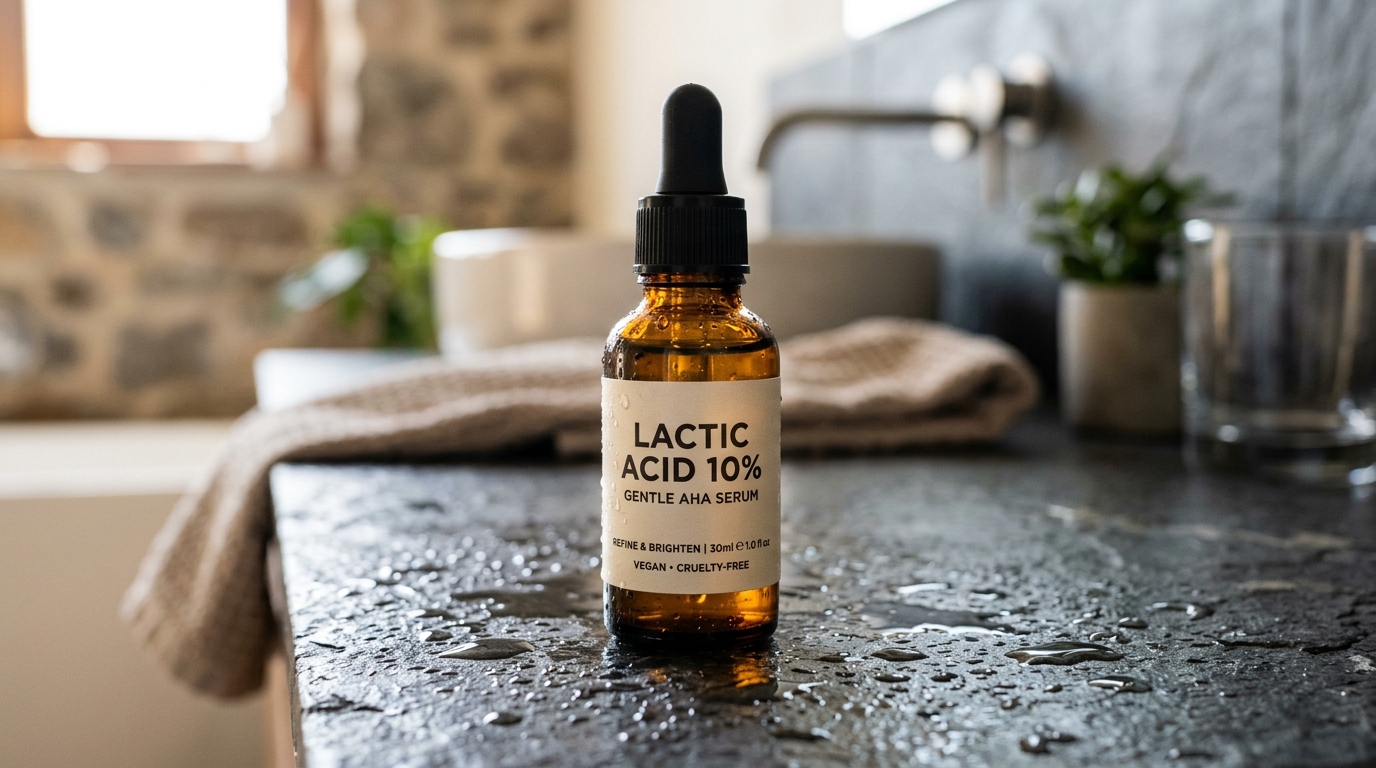
2. Keratolytic Night (3x weekly): Apply 2 to 3 drops of 10% Lactic Acid serum OR a thin pea-sized film of 5%–10% Urea cream strictly over the bumpy areas of the cheeks.
3. Rest Nights (4x weekly): On alternate nights, apply zero exfoliating acids. Focus purely on skin barrier replenishment using a ceramide and squalane moisturizer.
4. Seal: If your cheeks feel extremely dry during winter, press a drop of 100% pure Squalane oil over your moisturizer to prevent overnight moisture loss.
Fading Brown Follicular Marks: The Fitzpatrick III–VI PIH Defense
On Indian skin tones (Fitzpatrick phototypes III, IV, and V), facial KP does not just present as roughness; it frequently develops into Keratosis Pilaris Hyperpigmentosa — hundreds of tiny brown, charcoal, or slate-gray macules centered around each hair follicle across the cheekbones.
How to Fade Cheek KP Discoloration Safely
Introduce Azelaic Acid 10% Gel
Azelaic acid (such as Aziderm 10% Gel) is the premier active for brown skin cheek marks. It selectively downregulates abnormal, hyperactive melanocytes without bleaching surrounding normal skin, while simultaneously calming follicular redness. Apply on alternate evenings on non-lactic acid nights.
Strict Physical Sun Protection
Every time sunlight hits inflamed cheek KP, UV-A radiation stimulates tyrosinase enzymes to pump melanin into the keratin plugs. Wear broad-spectrum sunscreen daily, and use wide-brimmed hats or umbrellas when walking under peak Indian midday sun.
Patience: The 8-to-12 Week Timeline
While textural roughness improves within 2 to 3 weeks of using urea or lactic acid, brown follicular pigment takes 8 to 12 weeks to fade as the deeper dermal melanin turnover completes. Consistency is key.
Common Mistakes That Keep Your Cheeks Rough & Bumpy
Avoid these widespread skincare errors that sabotage facial KP recovery:
Frequently Asked Questions (FAQ)
No. Keratosis Pilaris is a harmless, genetically determined trait linked to filaggrin barrier deficiency, not a bacterial infection that can be permanently eradicated. However, it can be 100% managed. With consistent use of hydrating keratolytics (like Urea 5%–10% or Lactic Acid) and barrier moisturizers, your cheeks will feel completely smooth, soft, and unblemished. Most people also notice significant spontaneous improvement after their late 20s and 30s.
Crushed walnut and apricot shells have sharp, irregular edges that create micro-tears in the delicate cheek skin. The skin perceives this friction as mechanical injury and responds with 'reactive hyperkeratinization' — rapidly producing even more thick, compacted keratin to protect itself. This makes the bumps denser and rougher within a week, while causing dark hyperpigmented marks on Indian skin.
Salicylic acid (BHA) is oil-soluble and is primarily designed to cut through excess sebum in oily, acne-prone skin. Because facial KP occurs in inherently dry, barrier-deficient skin, using 2% salicylic acid face washes daily strips the remaining protective lipids, making the skin parched and the keratin plugs tighter. Hydrating keratolytics like 5%–10% Lactic Acid or 5% Urea are far superior for facial KP.
Moisturex contains 10% Urea and Lactic Acid. It is safe for facial skin if used carefully: use only a small pea-sized amount, mix it with a lightweight ceramide moisturizer, and apply it 2 to 3 nights a week to the bumpy areas of the cheeks. Avoid applying it near the sensitive eye area or on broken skin, as it will sting.
Facial KP is often accompanied by underlying vascular erythema (dilated micro-capillaries), creating a flushed red appearance known as Keratosis Pilaris Rubra Faciei. In Indian skin tones (Fitzpatrick phototypes III–VI), chronic low-grade inflammation also triggers melanocytes to deposit melanin around the hair follicle opening, resulting in tiny brown or grayish spots known as Keratosis Pilaris Hyperpigmentosa.
Textural roughness improves quickly. With consistent use of 5%–10% Lactic Acid or Urea combined with a rich ceramide moisturizer, most patients notice their cheeks feel significantly smoother and softer within 10 to 14 days. Fading underlying redness and brown hyperpigmented marks takes longer, typically 8 to 12 weeks with daily sunscreen and azelaic acid.
Drinking water and eating a balanced diet support general skin health, but they cannot alter the genetic filaggrin mutation that causes Keratosis Pilaris. KP must be managed topically by dissolving the keratin plugs and replenishing ceramides directly on the skin barrier.
No. Keratosis Pilaris never turns into cystic acne on its own because it does not involve Cutibacterium acnes infection or deep sebaceous gland abscesses. However, if you aggressively squeeze, needle, or scrub KP bumps, you can introduce Staphylococcus bacteria from your hands into the open follicle, causing a secondary bacterial folliculitis that resembles pimples.
