
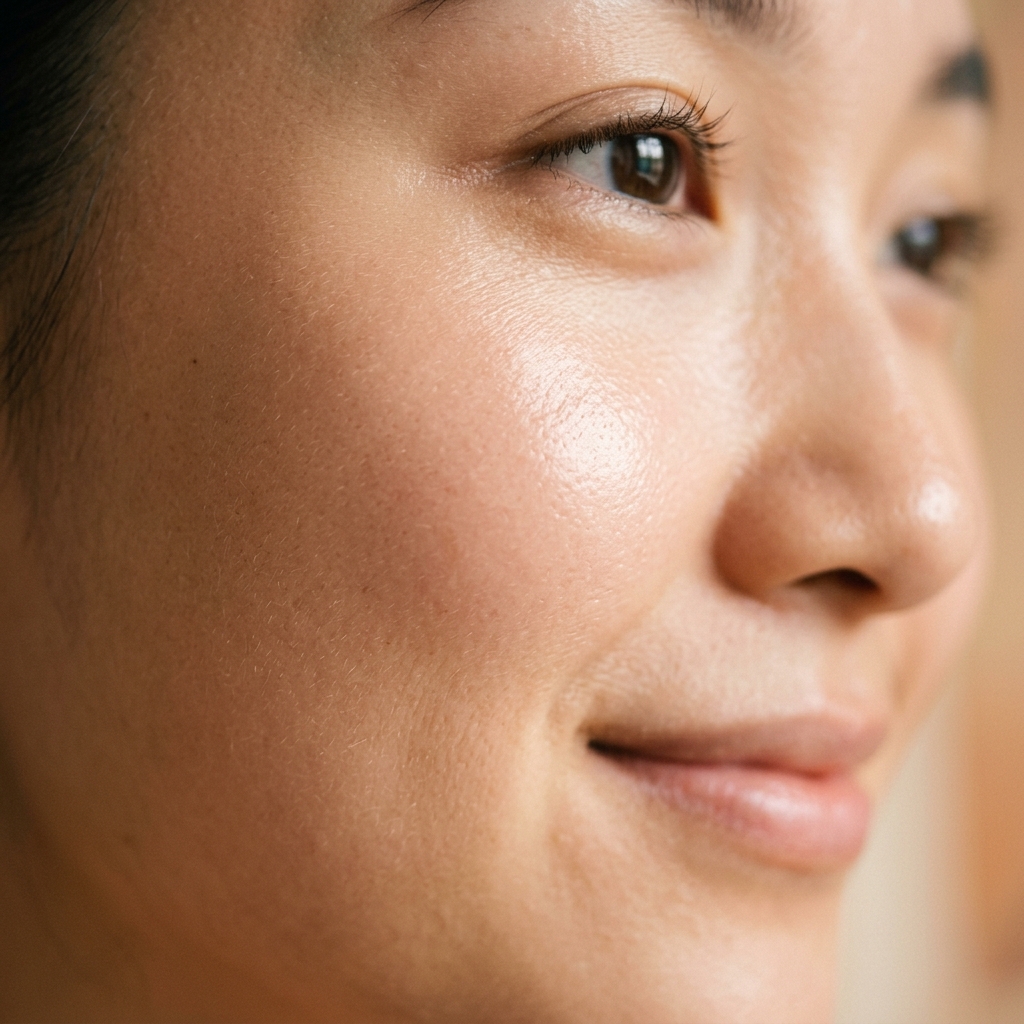
The Indian Exfoliation Paradox: Why Brown Skin Darkens from Viral Peels
Chemical exfoliation is widely promoted across social media as the universal antidote to rough texture, stubborn blackheads, and dullness. Yet in Indian dermatological practice, improper chemical exfoliation is the number one cause of acquired cosmetic facial darkening and secondary barrier breakdown.
This is known clinically as the "Brown Skin Exfoliation Paradox":
Unlike Caucasian skin (Fitzpatrick I–II) which responds to acid injury with temporary redness that resolves to baseline, Indian skin contains melanocytes primed for immediate defense. When low-pH acids breach the basement membrane too quickly, keratinocytes release interleukin-1α (IL-1α), prostaglandins, and endothelin-1. These inflammatory signals bind to melanocyte receptors, triggering massive tyrosinase synthesis and hyperactive eumelanin deposition.
When harsh acids dissolve the corneodesmosomes holding dead skin cells together without adequate intercellular lipid buffering, the stratum corneum's structural cohesion collapses. Instead of smooth "glass skin," the compromised skin develops micro-cracking, elevated TEWL, and a parched, leathery "sandpaper" texture that scatters light unevenly.
The clinical reality is stark: you cannot treat brown skin like white skin. Formulations designed for Northern European skin types (such as leave-on 30% Glycolic Acid or 7% daily watery toners) frequently induce subclinical chemical burns on Indian complexions, worsening the exact dual pathologies of Uneven Face Skin: Texture vs Tone.
⚠️ The Redness-to-Pigment Trap
In light skin, post-peel erythema (pinkness) is often seen as a harmless sign of efficacy. In Indian skin, erythema is the precursor to hyperpigmentation. Any chemical exfoliation protocol that causes prolonged burning, heat sensations, or visible flushing will reliably convert into dark brown Post-Inflammatory Hyperpigmentation (PIH) within 7 to 14 days.
Acid Biochemistry 101: Molecular Weight & Penetration Kinetics
Chemical exfoliants belong to three distinct pharmacological families: Alpha Hydroxy Acids (AHAs), Beta Hydroxy Acids (BHAs), and Polyhydroxy Acids (PHAs). Their therapeutic efficacy and safety profile are governed by one fundamental physical characteristic: Molecular Weight (measured in Daltons, Da).
Smaller molecules penetrate rapidly and unpredictably between corneocytes, creating localized "hot spots" of high acidity that burn brown skin. Larger molecules penetrate slowly and uniformly, exfoliating superficial layers without perturbing basal melanocytes.
| Acid Name | Family & Solubility | Molecular Weight | Penetration Speed | Safety for Indian Skin (Fitzpatrick IV–VI) |
|---|---|---|---|---|
| Glycolic Acid | AHA • Water-Soluble | 76 Daltons (Tiny) | Ultra-Rapid: Floods epidermis in seconds. | 🔴 High PIH Risk: Prone to hot spots and burns. Requires strict buffering or wash-off therapy. |
| Lactic Acid | AHA • Water-Soluble | 90 Daltons (Medium) | Controlled & Steady | 🟢 Highly Recommended: Derived from milk sugars; acts as a natural humectant component of NMF. Excellent for dull, dehydrated texture. |
| Mandelic Acid | AHA • Lipid/Water Amphiphilic | 152 Daltons (Bulky Ring) | Very Slow & Uniform | 🟢 Gold Standard for Brown Skin: Twice the size of glycolic. Penetrates gently; possesses natural antibacterial properties against acne. |
| Salicylic Acid | BHA • Lipophilic (Oil-Soluble) | 138 Daltons | Targeted to Follicular Sebum | 🟢 Non-Negotiable for Pores: Dissolves sebum and keratinocyte plugs inside pores. Has intrinsic anti-inflammatory properties (aspirin derivative). |
| Gluconolactone / Lactobionic | PHA • Water-Soluble | 178 – 358 Daltons (Huge) | Superficial Only | 🔵 Ideal for Sensitive Skin: Cannot penetrate past the superficial stratum corneum. Acts as an antioxidant and humectant while refining texture. |
Dermatological Rule of Thumb: For Indian skin struggling with uneven texture and tone, prioritize Mandelic Acid (5–10%) for gentle resurfacing, Salicylic Acid (1–2%) for pore decongestion, and Lactic Acid (5–10%) for barrier-friendly radiance. Leave high-strength Glycolic Acid (>10%) strictly to supervised in-clinic medical procedures.
Targeting Texture vs Tone: Matching Specific Acids to Clinical Presentations
"Uneven face skin" is never a single monolithic condition. Attempting to treat bumpy closed comedones with the same acid used for dermal melasma leads to clinical failure. Successful dermatological management requires diagnosing whether your primary presentation is Textural (tactile roughness), Chromic (pigmentation/tone), or Mixed:
Clinical Signs: Closed comedones on forehead/chin, enlarged "orange-peel" follicular openings on cheeks, sandpaper-like xerosis, cakey makeup application.
First-Line Acid: Salicylic Acid 2% (BHA) to unclog sebum channels, combined with Gluconolactone (PHA) to smooth superficial corneocyte flakes without irritating the low-sebum cheeks.
Clinical Signs: Post-acne brown marks (PIH), diffuse forehead darkening, sun tan, butterfly melasma on zygomatic bones. Skin feels smooth to touch but looks blotchy.
First-Line Acid: Lactic Acid 5–10% or Mandelic Acid 10% stacked with tyrosinase inhibitors (Azelaic Acid 10–15%, Alpha Arbutin 2%) to accelerate epidermal melanin shedding.
When patients present with both issues simultaneously—what we designate as the Texture-to-Pigment Cycle—the clinical priority must always be clearing textural inflammation first. Attempting to bleach pigment while active micro-comedones are still triggering inflammatory flares is like painting over peeling wallpaper.
The Free Acid Value & The pH Fallacy: Why % Concentration Lies
One of the greatest deceptions in commercial skincare marketing is the prominent display of acid percentages (e.g., "10% Glycolic Acid" or "25% AHA Blend"). In cosmetic chemistry, the percentage on the bottle does not determine how much acid actually penetrates your skin. What matters is the Free Acid Value (FAV), which is determined by the formulation's pH relative to the acid's dissociation constant (pKa).
🧪 The Henderson-Hasselbalch Relationship
An exfoliating acid exists in two forms in solution: un-ionized (free acid), which is lipophilic and can penetrate the lipid barrier, and ionized (salt), which is charged and cannot penetrate. When the solution pH equals the acid's pKa (typically ~3.83 for glycolic, ~3.86 for lactic, ~2.97 for salicylic), exactly 50% of the acid is active free acid.
Consider the clinical implications:
- Product A: 10% Glycolic Acid at pH 3.0 = 8.7% Free Active Acid (Extremely aggressive; high risk of chemical burning and PIH on Indian skin).
- Product B: 10% Glycolic Acid at pH 4.5 = 1.8% Free Active Acid (Very mild; safe for maintenance and gradual exfoliation).
- Product C: 25% AHA Blend at pH 3.2 = Massive surge of free acid that overwhelms the protective buffering capacity of brown skin within minutes.
For Fitzpatrick IV–VI Indian skin, an ideal at-home chemical exfoliant should have a pH between 3.6 and 4.2. Products formulated below pH 3.5 should be restricted to short-contact rinse-off use, while daily leave-on treatments must stay above pH 3.8 to prevent melanocyte triggering.
The 4-Stage Progressive Resurfacing Ladder for Indian Skin
To eliminate the risk of chemical burns while maximizing textural smoothing and tone clarity, dermatologists employ a Progressive Resurfacing Ladder. You never start at the top of the ladder with high-strength leave-on peels; you climb incrementally as your stratum corneum adapts:
Stage 1: Short-Contact Therapy (Wash-Off Actives) — Weeks 1 to 2
Begin with an active face wash (such as a 1%–2% Salicylic Acid or 1% Glycolic wash). Lather on the face for 45 to 60 seconds, then rinse completely with lukewarm water. This delivers enzymatic desmosomal loosening while the water-rinse halts acid penetration before it can touch basal melanocytes. Use 2 to 3 evenings per week.
Stage 2: Low-Percentage Buffered Serum (Leave-On) — Weeks 3 to 6
Introduce a buffered, large-molecule leave-on serum: Mandelic Acid 5%–10% or Lactic Acid 5% with soothing ingredients (Panthenol, Hyaluronic Acid, Centella). Apply 2 to 3 drops to bone-dry skin strictly once weekly. Follow 10 minutes later with a rich ceramide moisturizer.
Stage 3: Targeted Zone-Exfoliation — Weeks 7 to 10
Differentiate facial zones: apply Salicylic Acid 2% exclusively to the congested T-zone (forehead, nose, chin) twice weekly to keep pores clear, while applying Mandelic or Lactic Acid across the cheeks once weekly to polish texture and fade pigment.
Stage 4: Maintenance Skin Cycling — Week 11 Onward
Integrate into a stable 4-Night Skin Cycling regimen: Night 1 (Exfoliation), Night 2 (Retinoid / Adapalene), Nights 3 & 4 (Barrier Recovery). This cycle prevents active overload, ensuring continuous cellular turnover without chronic low-grade inflammation.
Clinical Evaluation of Popular Exfoliants in India: Independent Audit
Our dermatology panel evaluated the most widely purchased chemical exfoliants in the Indian market for safety on Fitzpatrick IV–VI skin, formulation pH, and risk of rebound PIH:
| Product Name | Active Complex | Measured pH | Target Presentation | Dermatologist Safety Verdict |
|---|---|---|---|---|
| The Ordinary AHA 30% + BHA 2% Peeling Solution | 30% Glycolic/Lactic/Tartaric + 2% Salicylic | 3.5 – 3.7 | Heavy Roughness / Keratosis | 🔴 High Hazard: Too aggressive for Indian beginners. Very high free acid index. Has caused countless chemical burns and PIH cases in India. Restrict to max 5 minutes, 1x/month. |
| Minimalist AHA 25% + PHA 5% + BHA 2% Peeling Solution | 25% Glycolic/Lactic + 5% Gluconolactone + 2% BHA | 3.4 – 3.8 | Textured, Congested Skin | ⚠️ Intermediate Only: Buffered with Aloe and Turmeric extract, but still powerful. Must start at 3-minute contact time, never overnight. |
| The Ordinary Lactic Acid 10% + HA | 10% Lactic Acid + Sodium Hyaluronate Crosspolymer | 3.6 – 3.8 | Dullness, Surface Flaking | 🟢 Highly Recommended: Balanced, hydrating exfoliation. Excellent for fading post-acne marks and smoothing superficial roughness on brown skin. |
| Paula's Choice Skin Perfecting 2% BHA Liquid | 2% Salicylic Acid in Methylpropanediol vehicle | 3.2 – 3.8 | Blackheads, Orange-Peel Pores | 🟢 Gold Standard for Pores: Deep follicular penetration with zero physical friction. Ideal for T-zone congestion and closed comedones. |
| Deconstruct Beginners Exfoliating Serum | 5% Lactic Acid + 0.5% Probiotics | 4.0 – 4.5 | Sensitive / First-Time Users | 🟢 Safest Beginner Choice: Gentle, low free-acid concentration with microbiome support. Zero peeling, zero stinging. |
| Glyco-6 / Glyco-12 Cream (Indian Pharma) | 6% or 12% Glycolic Acid in vanishing cream base | 3.8 – 4.5 | Thickened Hyperkeratosis | ⚠️ Strict Rules: Glyco-6 is well-tolerated if used as short-contact (wash off after 30 mins). Glyco-12 should be reserved for body areas (elbows, knees, dark neck). |
Active Layering Safety: Deadly Combinations vs Safe Synergy Stacks
In an attempt to achieve rapid results, many Indian skincare consumers layer multiple active serums in a single routine. On brown skin, conflicting active chemistries dramatically amplify irritancy:
| Active Combination | Interaction Mechanism | Clinical Consequence | Verdict |
|---|---|---|---|
| AHA/BHA + Retinoid (Same PM) | Simultaneous enzymatic desquamation + accelerated keratinocyte proliferation. | Massive stratum corneum barrier rupture, fiery erythema, intense burning, severe PIH. | ❌ STRICTLY FORBIDDEN |
| AHA/BHA + Pure Vitamin C (L-Ascorbic Acid) | Double ultra-low pH exposure (pH < 3.5) overwhelms skin buffering capacity. | Severe acid irritation, stinging, redness, lipid barrier depletion. | ❌ DANGEROUS |
| AHA/BHA + Benzoyl Peroxide (BPO) | Acid penetration + potent oxidative radical damage. | Severe dryness, contact dermatitis, peeling, raw skin. | ❌ AVOID |
| AHA/BHA + Niacinamide (5%) | Acid resurfacing + ceramide synthesis upregulation and melanosome transfer inhibition. | Synergistic tone evening, reduced pore inflammation, enhanced barrier defense. | 🟢 EXCELLENT SYNERGY (Wait 10 min between) |
| AHA/BHA + Hyaluronic Acid & Ceramides | Controlled chemical desquamation followed immediately by lamellar lipid sealing. | Smooth, luminous, hydrated skin with zero post-peel flaking. | 🟢 GOLD STANDARD POST-PEEL CARE |
7 Deadly Exfoliation Mistakes on Indian Skin
Avoid these widespread misconceptions that turn mild textural irregularities into long-term dermatological disasters:
Water on the skin speeds up the penetration rate of water-soluble AHAs by tenfold, causing immediate chemical hot spots and burning. Always pat dry and wait 10 full minutes before applying any acid serum.
AHAs thin the superficial stratum corneum, increasing cutaneous UV sensitivity by up to 50%. Chemical exfoliation must be performed strictly at night, followed by broad-spectrum sunscreen the next morning.
Using a facial scrub, spinning cleansing brush, or loofah alongside chemical exfoliants causes jagged mechanical tears across chemically softened keratinocytes. This guarantees post-inflammatory dark spots.
A mild 10-second tingle is normal. Continuous burning, stinging, or throbbing is not "the acid working"—it is a chemical burn in progress. Wash it off immediately with cool water.
Upper lip threading, waxing, or dermaplaning removes superficial stratum corneum cells mechanically. Applying acid to newly threaded skin causes instant chemical contact dermatitis and the classic "dark mustache shadow."
UVA rays penetrate monsoon clouds and window glass effortlessly. Post-exfoliation skin exposed to UV without SPF will develop darker, deeper pigmentation than before you started exfoliating.
Mistake #7: Treating Dry Cheeks with the Same Strength as Oily T-Zones
On Indian combination skin, applying a 2% BHA or strong AHA equally across low-sebum lateral cheeks strips the lipid barrier and causes chronic flaking. Zone-map your acids: apply pore-clearing BHA exclusively to the T-zone and gentle PHA/Mandelic to the cheeks.
Emergency Protocol: How to Reverse an Acid Burn & Prevent Permanent PIH
If your skin feels hot, red, raw, or has a tight "shiny plastic" texture after using an exfoliating product, act immediately. The first 48 hours determine whether the burn heals cleanly or leaves permanent dark brown discoloration:
Immediate Copious Rinse (3 Minutes)
Splash your face continuously with cool (not freezing cold) tap water for 3 to 5 minutes. Do not use soap, face wash, or alkaline cleansers. Gently pat dry with a soft, clean cotton towel—never rub.
Cold Thermal Water / Saline Compress
Soak clean gauze in cold physiological saline or thermal spring water and rest it across the burning areas for 10 minutes. This lowers skin temperature and constricts dilated dermal capillaries, reducing the inflammatory cascade.
Pure Physiological Lipid Occlusion
Apply a generous layer of a bland barrier balm formulated with Panthenol (5%), Madecassoside (Centella Asiatica), and Ceramides (e.g., La Roche-Posay Cicaplast Baume B5 or Bioderma Atoderm Intensive Baume). Avoid all fragrances, essential oils, or active botanical extracts.
Total Active Blackout & Mineral Sunscreen (14 Days)
Halt all chemical exfoliants, retinoids, Vitamin C serums, scrubs, and foaming cleansers for a minimum of two weeks. Cleanse with water or ultra-gentle micellar water only. Protect the healing skin with a 100% mineral sunscreen (Zinc Oxide) daily.
🚨 When to Consult a Dermatologist Immediately
If your skin develops blistering, oozing yellow serous fluid, persistent severe swelling, or deep greyish-black discoloration, see a board-certified dermatologist within 24 hours. Prescription short-course topical corticosteroids (such as Mometasone 0.1% or Hydrocortisone 1%) may be required to abort irreversible melanocyte hyperactivation.
Frequently Asked Questions (Clinical FAQ)
Q1: Why did my chemical peel make my uneven skin darker instead of lighter?
This is post-inflammatory hyperpigmentation (PIH), the most frequent complication of chemical exfoliation on Indian skin (Fitzpatrick IV–VI). Brown skin contains hyper-reactive epidermal melanocytes. When a high-concentration acid (like a 30% AHA peel) or low-pH solution causes subclinical chemical burning or excessive erythema, inflammatory cytokines (prostaglandins and leukotrienes) directly stimulate tyrosinase, triggering a surge of melanin synthesis that leaves mottled dark patches.
Q2: Which acid is safer for Indian skin: Glycolic Acid, Lactic Acid, or Mandelic Acid?
Mandelic Acid and Lactic Acid are significantly safer than Glycolic Acid for Indian skin. Glycolic acid has a tiny molecular weight (76 Daltons), causing rapid, uneven penetration that frequently triggers burning and PIH. Mandelic acid has a bulky aromatic ring with double the molecular weight (152 Daltons), allowing slow, controlled, uniform dermal diffusion. Lactic acid (90 Daltons) is naturally hydrating and gentler than glycolic.
Q3: How do I tell the difference between skin purging and a chemical burn?
Purging occurs exclusively in areas where you already get breakouts (like the T-zone) and manifests as small whiteheads or rapid-resolving papules that clear within 4 to 6 weeks. A chemical burn manifests as intense stinging, redness, a tight "parchment-like" or waxen skin texture, swelling, or darkened hyperpigmented patches appearing in areas where you rarely break out (like the lateral cheeks). If skin stings with plain water or moisturizer, it is a burn, not purging.
Q4: Can I use chemical exfoliants if I am already using a retinoid (like Adapalene or Tretinoin)?
Yes, but never layered on the same night. Follow a structured Skin Cycling framework: designate Night 1 for Chemical Exfoliation (BHA or gentle AHA), Night 2 for your Retinoid, and Nights 3 and 4 strictly for Barrier Recovery (ceramides, panthenol, hyaluronic acid). Stacking acids and retinoids simultaneously shatters the stratum corneum barrier.
Q5: Should chemical exfoliants be applied on damp or dry skin?
Chemical exfoliants must ALWAYS be applied to 100% bone-dry skin. Water on the skin surface accelerates the penetration kinetics of water-soluble acids (AHAs), allowing them to flood the stratum corneum abruptly and dramatically increasing the risk of chemical burns and erythema. Wait 10 to 15 minutes after washing your face before applying any leave-on exfoliating serum.
Q6: Can I chemically exfoliate during the hot Indian summer or monsoon?
Yes, but you must adjust your formulation. In high summer (intense UV index 10+), reduce strong AHA frequency to avoid severe photosensitization, and prioritize lipophilic BHA (Salicylic Acid) to control sweat-sebum pore congestion. Always apply broad-spectrum sunscreen (SPF 50+ PA++++) daily with reapplication every 2 to 3 hours if outdoors.
Q7: What should I do if an exfoliating acid starts burning and turning red?
Rinse your face immediately with abundant cool tap water for 3 full minutes to dilute and wash away the free acid. Do NOT apply hot water or alkaline soap. Pat dry with a clean cloth and apply a thick, bland barrier layer containing pure Centella Asiatica, Panthenol (Vitamin B5), or physiological ceramides. Discontinue all actives for 10 to 14 days.
Q8: How often should someone with Indian combination skin exfoliate?
For most Indian combination skin types, exfoliating 1 to 2 times per week is optimal. More frequent use (3+ times weekly) strips the low-sebum cheeks. We recommend a zone-targeted protocol: apply 2% BHA to the oily, congested T-zone 2 nights per week, while using a gentle Mandelic or Lactic Acid across the whole face only once every 7 to 10 days.